Quantum computing promises revolutionary computational power, but unlocking its potential depends entirely on solving one critical challenge: error correction and fault tolerance in quantum systems.

🔬 Why Quantum Computers Need Error Correction More Than Ever
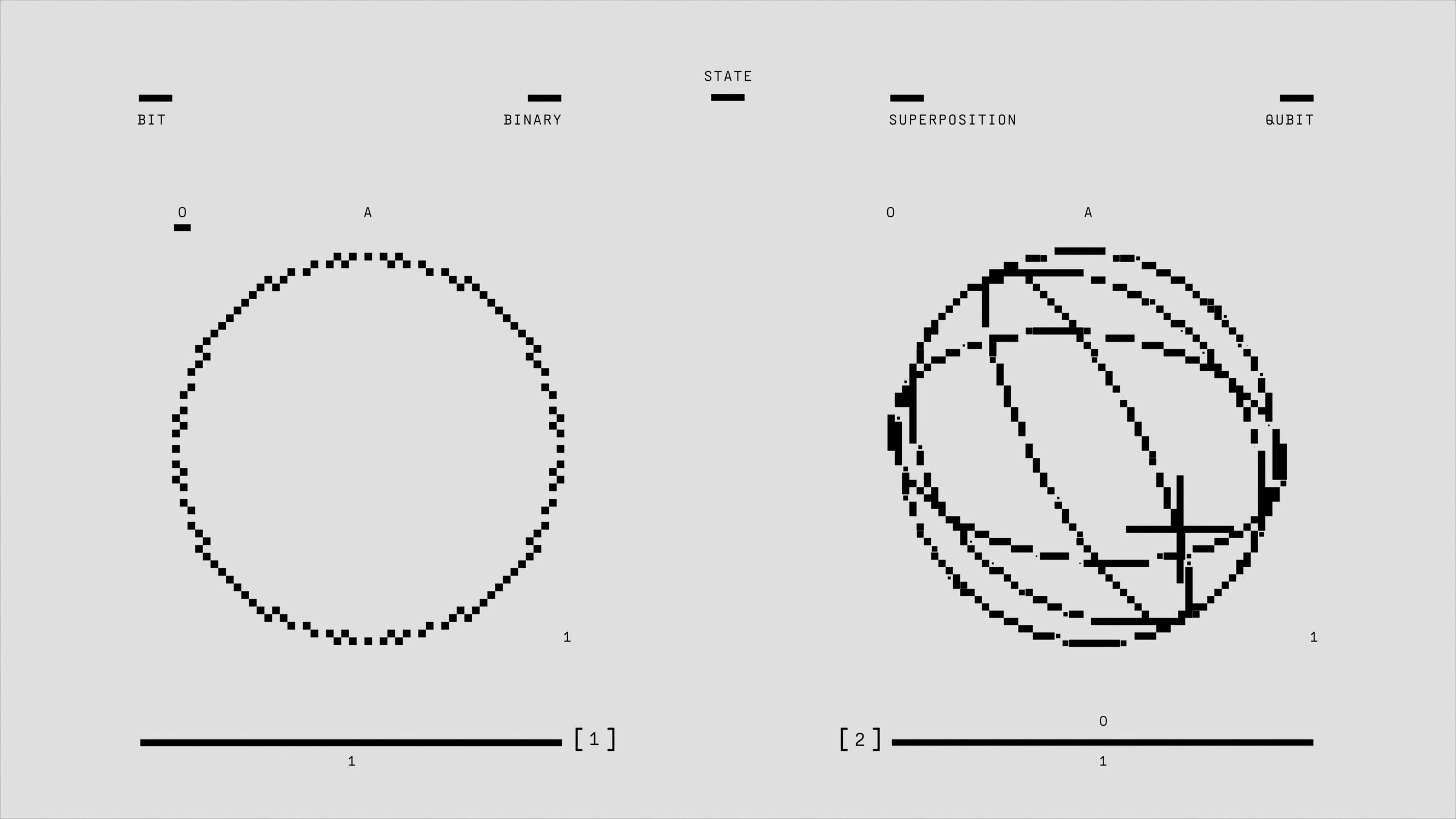
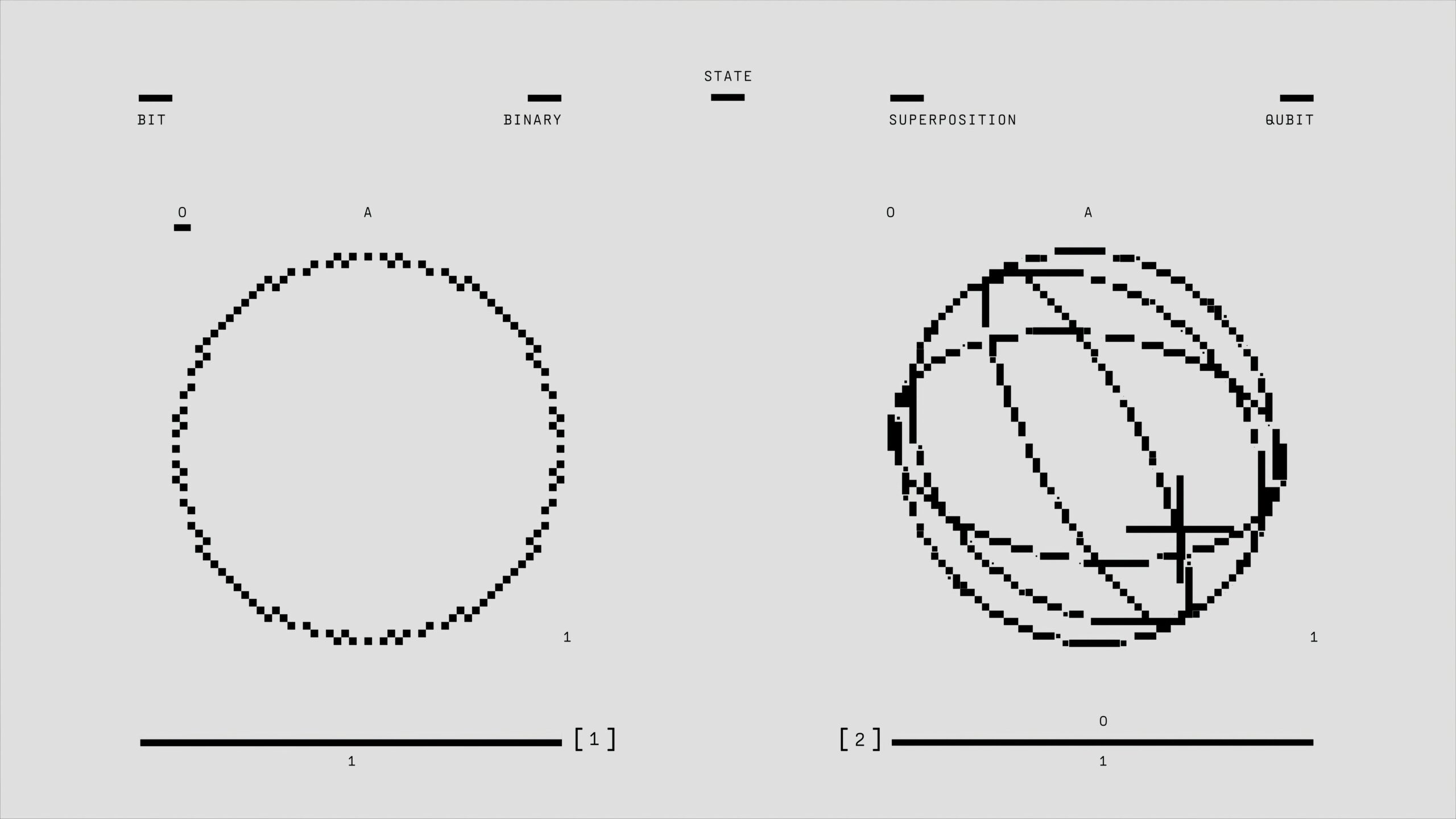
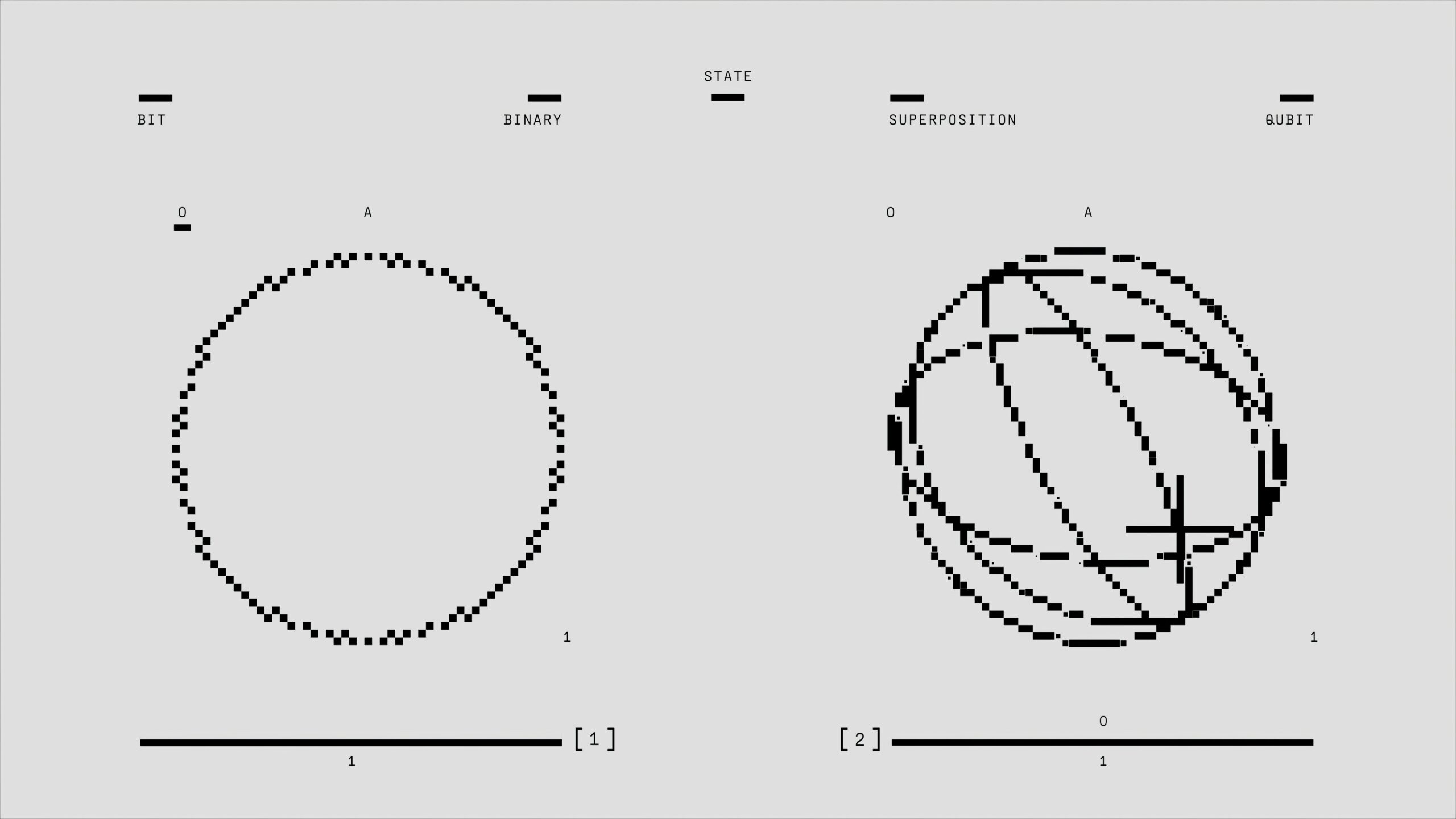
Unlike classical computers that operate with stable bits representing 0s and 1s, quantum computers work with qubits that exist in delicate superposition states. These quantum states are extraordinarily fragile, susceptible to environmental noise, temperature fluctuations, electromagnetic interference, and even cosmic radiation. The slightest disturbance can cause decoherence, destroying the quantum information and rendering calculations useless.
The error rates in current quantum systems are alarmingly high compared to classical computing. While classical computers achieve error rates of approximately one in a billion billion operations, quantum computers today experience errors in roughly one out of every thousand operations. This million-billion-fold difference represents the enormous challenge facing quantum engineers and researchers worldwide.
Without robust error correction mechanisms, quantum computers cannot scale beyond simple demonstrations. The dream of solving complex problems in cryptography, drug discovery, materials science, and artificial intelligence remains out of reach unless we master the art of protecting quantum information from inevitable errors.
⚛️ Understanding Quantum Errors: The Enemy Within
Quantum errors manifest in fundamentally different ways than classical computing errors. In classical systems, bits accidentally flip from 0 to 1 or vice versa. Quantum systems face three primary types of errors that are far more complex to address.
Bit-Flip Errors in Quantum Systems
Similar to classical bit flips, quantum bit-flip errors occur when a qubit in state |0⟩ accidentally transforms into state |1⟩, or the reverse. However, because qubits can exist in superposition, the error affects the entire quantum state, not just a single definitive value. This makes detection and correction significantly more challenging than in classical computing.
Phase-Flip Errors: The Quantum-Specific Challenge
Phase-flip errors have no classical equivalent. They occur when the relative phase between the |0⟩ and |1⟩ components of a superposition state gets flipped. A state like |0⟩ + |1⟩ might become |0⟩ – |1⟩. While the probabilities of measuring 0 or 1 remain unchanged, the quantum interference patterns that give quantum computers their power are completely disrupted.
Depolarizing and Amplitude Damping
More subtle errors include depolarizing noise, where qubits lose their quantum information and drift toward a completely mixed state, and amplitude damping, where excited qubits spontaneously decay to their ground state, similar to radioactive decay. These continuous errors require sophisticated mathematical frameworks to model and correct.
🛡️ The Foundations of Quantum Error Correction
Quantum error correction relies on a counterintuitive principle: protecting quantum information by spreading it across multiple physical qubits to create logical qubits. This redundancy allows us to detect and correct errors without directly measuring the quantum state, which would destroy the superposition we’re trying to protect.
The breakthrough came in the mid-1990s when researchers discovered that despite the no-cloning theorem—which prohibits perfect copying of unknown quantum states—it’s still possible to encode quantum information in ways that enable error detection and correction. This discovery opened the door to practical quantum computing.
The Shor Code: A Pioneering Achievement
Peter Shor’s nine-qubit code, developed in 1995, was the first quantum error correction code capable of protecting against arbitrary single-qubit errors. It encodes one logical qubit into nine physical qubits, using three qubits to protect against bit-flip errors and three repetitions of this structure to protect against phase-flip errors.
While the Shor code proved that quantum error correction was theoretically possible, its overhead—requiring nine physical qubits for each logical qubit—made it impractical for real systems. Nevertheless, it established the fundamental principles that all subsequent codes build upon.
Stabilizer Codes and the CSS Construction
Stabilizer codes represent a more general framework for quantum error correction. They use the mathematical structure of group theory to define quantum states that remain unchanged under certain operations called stabilizers. By measuring these stabilizers, we can detect errors without collapsing the quantum state we’re protecting.
The Calderbank-Shor-Steane (CSS) construction provides a systematic method for building quantum error correction codes from classical linear codes. This connection between classical and quantum coding theory has proven invaluable, allowing researchers to leverage decades of classical coding theory research.
📊 Surface Codes: The Leading Candidate for Practical Implementation
Among the various quantum error correction schemes, surface codes have emerged as the most promising approach for near-term quantum computers. Their popularity stems from several practical advantages that align well with the constraints of physical quantum hardware.
Surface codes arrange qubits in a two-dimensional lattice, with data qubits occupying the vertices and syndrome qubits measuring interactions between neighboring data qubits. This geometric arrangement requires only nearest-neighbor interactions, making it compatible with many physical quantum computing platforms including superconducting circuits and trapped ions.
How Surface Codes Detect and Correct Errors
The syndrome qubits in a surface code repeatedly measure specific combinations of data qubits without revealing the actual quantum information encoded in the system. When errors occur, they create distinctive patterns in the syndrome measurements that reveal where errors have happened without destroying the quantum state.
Sophisticated decoding algorithms analyze these syndrome patterns to infer the most likely error that occurred and apply the appropriate correction. The decoding problem is mathematically equivalent to finding minimum-weight perfect matchings in graphs, a well-studied problem in classical computer science.
Thresholds and Logical Error Rates
Surface codes exhibit a crucial property called the threshold theorem: if physical error rates remain below a certain threshold (approximately 1% for surface codes), adding more physical qubits actually decreases the logical error rate exponentially. This scalability is essential for building practical quantum computers.
Current experimental implementations have demonstrated surface code error correction with physical error rates approaching this threshold, marking significant progress toward fault-tolerant quantum computing. Companies like Google, IBM, and Rigetti are actively pursuing surface code implementations in their quantum processors.
⚙️ Fault-Tolerant Quantum Gates: Computing Without Spreading Errors
Error correction alone isn’t sufficient for practical quantum computing. We also need methods to perform quantum gates—the basic operations that manipulate qubits—in ways that don’t spread errors faster than we can correct them. This requirement leads to the concept of fault-tolerant quantum computing.
A quantum gate is fault-tolerant if a single error in its implementation causes at most one error in each output code block. This property prevents error cascades where a single physical error rapidly proliferates into many errors that overwhelm the error correction system.
Transversal Gates: The Gold Standard
Transversal gates implement logical operations by applying physical gates independently to corresponding qubits in the encoded blocks. Because there’s no interaction between different positions in the code, a single physical error cannot spread to multiple locations, automatically providing fault tolerance.
Unfortunately, the Eastin-Knill theorem proves that no quantum error correction code can implement a universal set of gates transversally. This fundamental limitation means we need additional techniques to achieve universal fault-tolerant quantum computation.
Magic State Distillation: Completing the Universal Gate Set
Magic state distillation provides a workaround to the Eastin-Knill theorem. The technique produces high-quality “magic states”—special quantum states that enable non-transversal gates like the T gate—from multiple noisy copies. By consuming these distilled magic states, quantum computers can implement any quantum algorithm fault-tolerantly.
The resource overhead for magic state distillation is substantial, often dominating the total cost of fault-tolerant quantum algorithms. Researchers are actively developing more efficient distillation protocols and alternative approaches like code switching to reduce this overhead.
🚀 Recent Breakthroughs Accelerating Progress
The field of quantum error correction has experienced remarkable acceleration in recent years, with both theoretical advances and experimental demonstrations pushing closer to practical fault-tolerant quantum computing.
Quantum Low-Density Parity-Check Codes
Recent theoretical work has developed quantum low-density parity-check (qLDPC) codes that require far fewer physical qubits per logical qubit than surface codes. Some qLDPC codes achieve constant overhead, meaning the number of physical qubits grows linearly rather than polynomially with the code distance—a dramatic improvement in efficiency.
These codes could reduce the physical qubit requirements for useful quantum computers from millions to thousands, potentially accelerating the timeline to practical applications by years or even decades. However, implementing qLDPC codes requires long-range qubit connectivity, presenting significant engineering challenges.
Real-Time Error Correction Demonstrations
Multiple research groups have demonstrated real-time quantum error correction, where syndrome measurements and corrections occur faster than decoherence destroys the quantum information. Google’s quantum processor achieved this milestone in 2021, demonstrating that larger error-corrected codes indeed have lower logical error rates than smaller ones—empirical proof of the threshold theorem.
These experiments validate decades of theoretical work and provide confidence that fault-tolerant quantum computing is achievable with continued engineering improvements in qubit quality and control systems.
💡 Practical Strategies for Different Quantum Platforms
Different physical implementations of quantum computers—superconducting circuits, trapped ions, topological qubits, and others—face unique error profiles and constraints that influence their error correction strategies.
Superconducting Qubit Systems
Superconducting quantum computers, pioneered by companies like IBM, Google, and Rigetti, typically implement surface codes due to their compatibility with planar chip architectures and nearest-neighbor connectivity. These systems excel at fast gate operations but face relatively short coherence times, making efficient real-time decoding crucial.
Trapped Ion Quantum Computers
Trapped ion systems offer exceptional qubit quality with long coherence times and high-fidelity gates. Their all-to-all connectivity enables more flexible error correction codes, potentially allowing more efficient schemes than surface codes. Companies like IonQ and Honeywell (now Quantinuum) are exploring various coding strategies optimized for this platform.
Topological Quantum Computing
Microsoft’s approach to quantum computing relies on topological qubits based on exotic quasiparticles called anyons. If successfully realized, topological qubits would have intrinsic protection against local errors, dramatically reducing error correction overhead. However, creating and manipulating these qubits remains an experimental challenge.
🎯 The Road Ahead: Challenges and Opportunities
Despite impressive progress, significant challenges remain before fault-tolerant quantum computers can tackle practical problems beyond the reach of classical supercomputers.
The physical qubit counts required for useful applications remain daunting. Estimates suggest that breaking RSA encryption or simulating large molecules may require millions of physical qubits, far beyond current capabilities. Reducing this overhead through better codes, improved physical qubits, and algorithmic innovations is critical.
Fast, efficient decoding algorithms running on classical hardware must keep pace with quantum operations. As quantum processors scale to thousands of qubits with millions of syndrome measurements per second, the computational demands on classical decoders grow substantially. Machine learning approaches show promise for accelerating decoding, but require further development.
Integration with Quantum Algorithms
Quantum algorithms must be redesigned to work efficiently with error-corrected logical qubits rather than bare physical qubits. This co-design between algorithms and error correction will be essential for achieving quantum advantage in practical applications.
🌟 Transforming Theory Into Reality
The journey from fragile quantum states to robust, fault-tolerant quantum computers represents one of the great scientific and engineering challenges of our time. Success requires advances across multiple disciplines: fundamental physics, advanced materials science, control systems engineering, computer science, and mathematics.
Investment in quantum error correction research continues to grow, with governments, tech giants, and startups worldwide committing billions of dollars to solving these challenges. Academic institutions are training a new generation of quantum engineers who combine knowledge from traditionally separate fields.
The progress over the past decade suggests that fault-tolerant quantum computing is not merely a theoretical possibility but an achievable engineering goal. As physical qubit quality improves, error correction codes become more efficient, and our control over quantum systems grows more sophisticated, the vision of practical quantum computers solving real-world problems draws steadily closer.
For researchers, engineers, and enthusiasts following this field, the coming years promise exciting developments as the first true fault-tolerant quantum processors move from laboratory demonstrations to preliminary applications. The secrets of quantum error correction are being uncovered, one breakthrough at a time, paving the way for a computational revolution that will transform technology, science, and society in ways we’re only beginning to imagine.