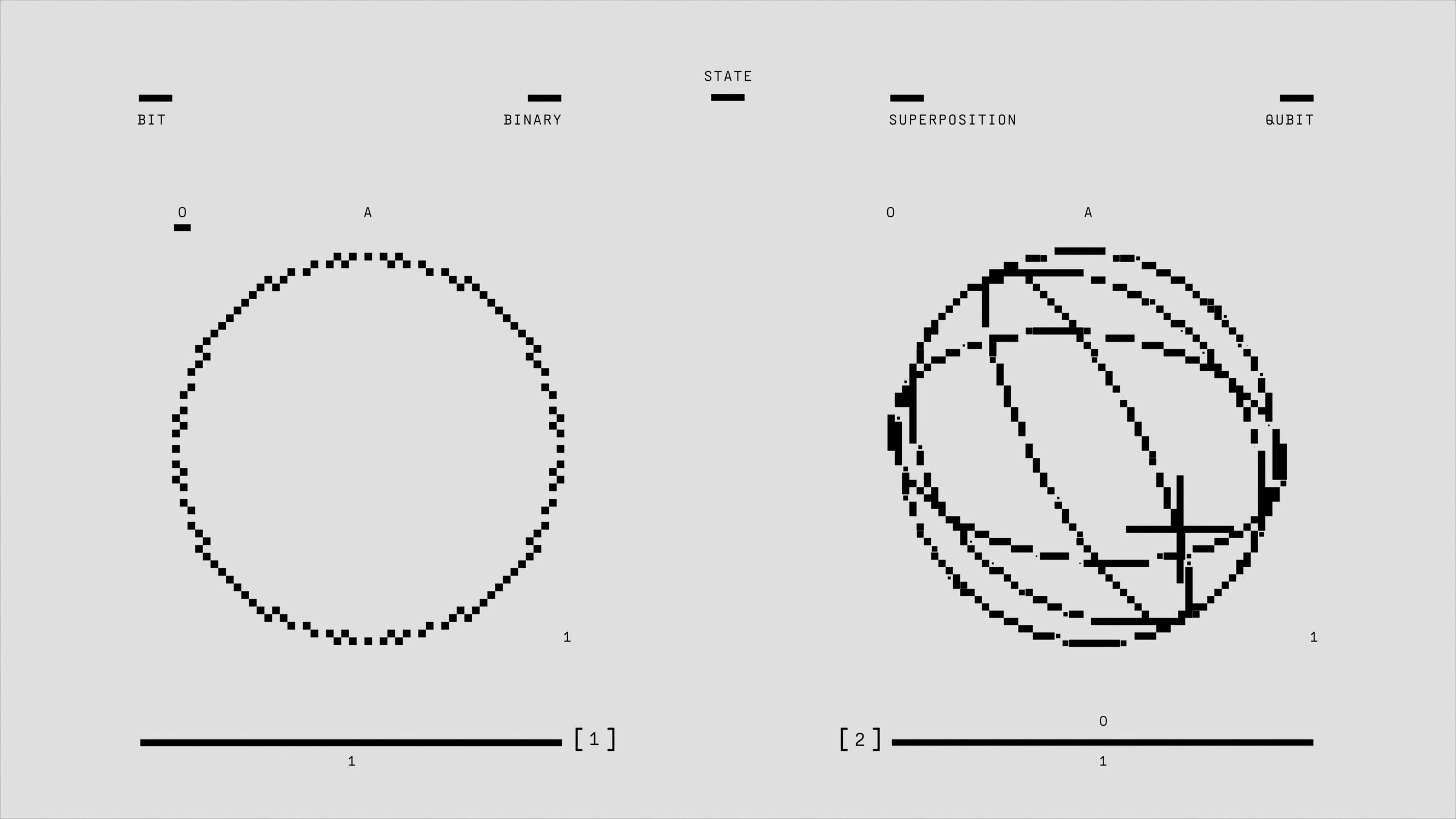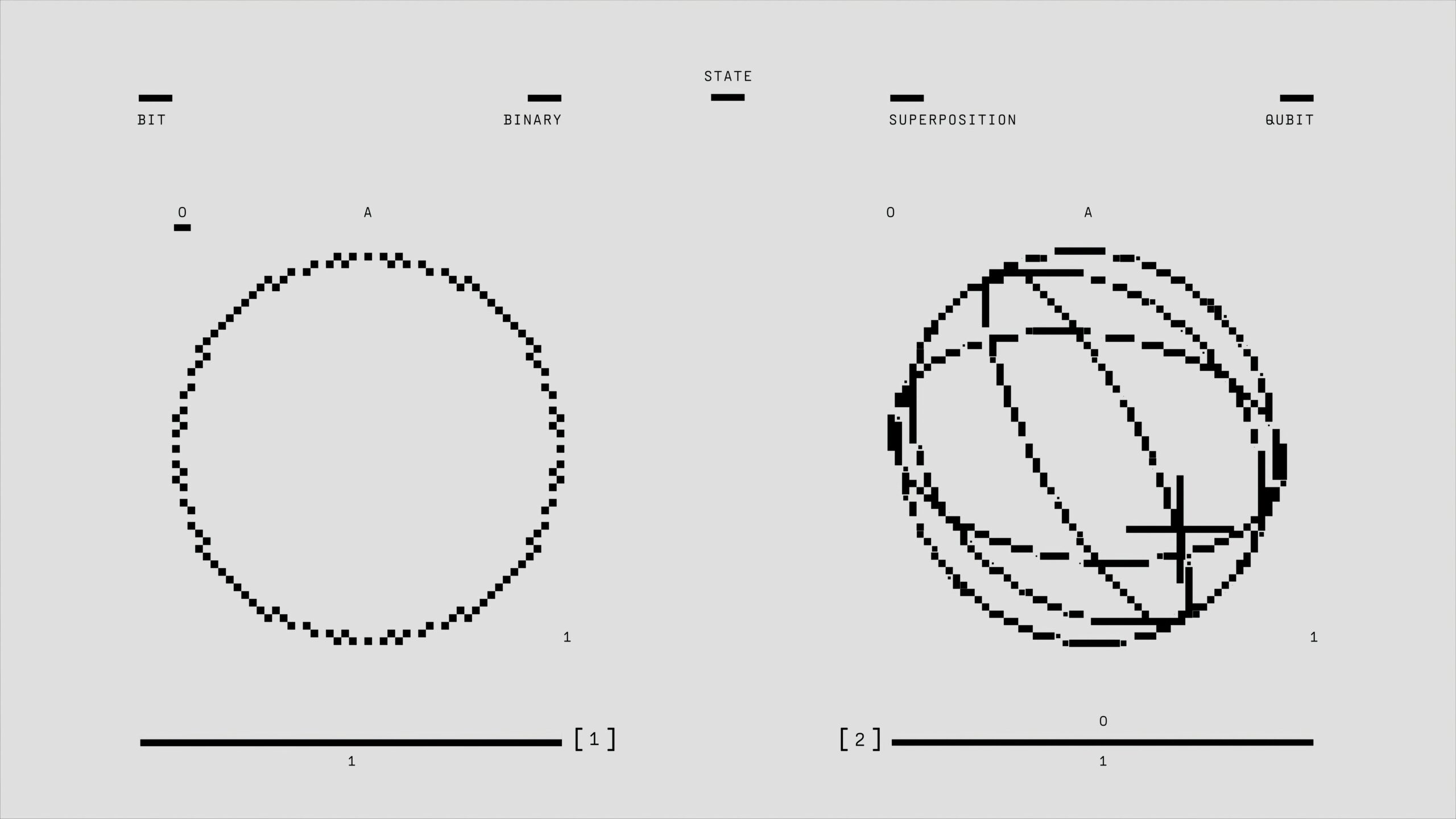
Quantum computing stands at the frontier of technological innovation, promising to solve problems beyond the reach of classical computers through revolutionary hardware designs.

🚀 The Dawn of Quantum Processing: Understanding the Paradigm Shift
The computing world is experiencing a fundamental transformation as quantum processors emerge from theoretical physics laboratories into practical reality. Unlike classical computers that process information in binary bits, quantum processors harness the peculiar properties of quantum mechanics to perform calculations in ways that challenge our conventional understanding of computation. This revolutionary approach relies on qubits—quantum bits—that can exist in multiple states simultaneously through superposition, enabling parallel processing at scales previously unimaginable.
The development of quantum hardware architectures represents one of the most ambitious engineering challenges of our time. Scientists and engineers are racing to build stable, scalable quantum systems that can maintain delicate quantum states long enough to perform meaningful calculations. This quest has spawned multiple competing architectures, each with unique advantages and challenges that could determine the future trajectory of quantum computing technology.
Superconducting Circuits: Leading the Quantum Revolution
Superconducting quantum processors currently dominate the quantum computing landscape, employed by industry giants including IBM, Google, and Rigetti Computing. These systems utilize superconducting circuits cooled to temperatures near absolute zero—typically around 15 millikelvin—where electrical resistance disappears and quantum effects become observable and controllable.
The fundamental building block of superconducting quantum computers is the transmon qubit, a type of charge qubit designed to be less sensitive to charge noise while maintaining sufficient anharmonicity for quantum operations. These qubits consist of Josephson junctions—thin insulating barriers sandwiched between superconducting materials—that allow quantum tunneling of Cooper pairs, creating the nonlinear inductance necessary for quantum behavior.
Architecture Design and Connectivity Patterns
Superconducting quantum processors typically arrange qubits in specific geometric patterns that determine which qubits can interact directly. Common topologies include linear arrays, square lattices, and heavy-hexagon arrangements. Google’s Sycamore processor, which achieved quantum supremacy in 2019, uses a rectangular grid of 54 qubits with nearest-neighbor connectivity, allowing each qubit to interact with up to four adjacent qubits.
IBM has pioneered the heavy-hexagon lattice architecture, which provides improved connectivity while maintaining fabrication feasibility. This design allows for more efficient implementation of quantum error correction codes, essential for building fault-tolerant quantum computers. The connectivity pattern directly impacts the overhead required for executing quantum algorithms, as operations between non-adjacent qubits require additional SWAP gates that increase error rates and computation time.
⚡ Trapped Ion Quantum Computers: Precision Through Electromagnetic Control
Trapped ion systems represent an alternative approach that achieves exceptional qubit quality through electromagnetic confinement of individual atoms. Companies like IonQ, Honeywell, and Alpine Quantum Technologies have developed processors using this technology, which offers some of the highest gate fidelities and longest coherence times in the quantum computing field.
In these systems, individual ions—typically ytterbium, calcium, or barium—are isolated in ultra-high vacuum chambers and held in place by oscillating electromagnetic fields created by specially designed Paul traps or surface electrode traps. Laser beams manipulate the quantum states of these ions, encoding information in their electronic energy levels or hyperfine states. The ions are cooled to their quantum mechanical ground state using laser cooling techniques, minimizing thermal noise that could disrupt quantum operations.
All-to-All Connectivity Advantage
One distinctive advantage of trapped ion architectures is their inherent all-to-all connectivity. Unlike superconducting systems where qubits have limited physical connectivity, trapped ions can interact with any other ion in the chain through shared motional modes—collective vibrations of the entire ion crystal. This flexibility dramatically reduces the circuit depth required for complex quantum algorithms, potentially offsetting the slower gate speeds compared to superconducting systems.
Modern trapped ion processors utilize sophisticated control systems that direct multiple laser beams with picosecond precision to individual ions or ion pairs. Recent innovations include the development of integrated photonics chips that deliver laser light to ion traps, significantly reducing the optical complexity and improving system scalability. Some architectures are exploring quantum charge-coupled device (QCCD) designs, where ions can be shuttled between different trap zones for storage, processing, and readout operations.
Photonic Quantum Processors: Computing with Light
Photonic quantum computing encodes information in individual photons, leveraging their natural resistance to decoherence and ability to operate at room temperature. Companies like Xanadu, PsiQuantum, and Photonic Inc. are developing processors based on optical quantum technologies, pursuing distinct architectural approaches that could revolutionize how quantum computers are built and deployed.
Continuous-variable photonic systems use the quadrature amplitudes of electromagnetic fields as computational variables, manipulating squeezed states of light through optical components like beam splitters and phase shifters. Xanadu’s approach involves generating cluster states—highly entangled quantum states—that serve as a substrate for measurement-based quantum computation. Their processors use squeezed light sources integrated with programmable interferometers to create and manipulate these quantum states.
Discrete-Variable Photonic Architectures
Discrete-variable photonic quantum computers encode qubits in single photons, typically using polarization, path, or time-bin encoding. These systems face the significant challenge of creating high-quality single-photon sources and photon-photon interactions, which don’t occur naturally. PsiQuantum is developing a fusion-based approach that creates entanglement through photon measurements, building large-scale quantum states through probabilistic operations combined with feedforward control.
Silicon photonics provides a promising platform for scalable photonic quantum processors, leveraging mature semiconductor fabrication techniques developed for telecommunications. These integrated photonic circuits can incorporate thousands of components—waveguides, modulators, detectors—on a single chip, dramatically reducing size and improving stability compared to bulk optical setups. Recent advances in integrated single-photon sources using quantum dots or nonlinear optical processes are bringing fully integrated photonic quantum computers closer to reality.
🧊 Neutral Atom Arrays: Programmable Quantum Architectures
Neutral atom quantum processors arrange hundreds of individual atoms in configurable patterns using optical tweezers—tightly focused laser beams that trap atoms through the dipole force. This approach, pioneered by companies like QuEra Computing and Pasqal, offers unprecedented flexibility in qubit arrangement and the potential for easy scaling to large qubit numbers.
These systems typically use alkali atoms like rubidium or cesium, which have convenient energy level structures for laser manipulation and detection. Individual atoms are loaded into a magneto-optical trap, then transferred into an array of optical tweezers created by a spatial light modulator or digital micromirror device. This allows researchers to create arbitrary geometric patterns with single-atom precision, reconfiguring the architecture for different computational tasks.
Rydberg Blockade and Quantum Gates
Neutral atom processors leverage the Rydberg blockade mechanism to create quantum gates. When atoms are excited to Rydberg states—highly excited electronic states with large principal quantum numbers—they develop strong, long-range interactions that can prevent nearby atoms from being simultaneously excited. This blockade effect enables high-fidelity two-qubit gates between atoms separated by several micrometers.
The programmability of neutral atom arrays extends beyond qubit positioning. Researchers can dynamically adjust the strength and range of interactions by tuning laser parameters, effectively programming both the quantum hardware architecture and the computation itself. This flexibility makes neutral atom systems particularly well-suited for quantum simulation tasks, where the goal is to mimic complex physical systems rather than execute abstract algorithms.
Topological Quantum Computing: Error-Resistant Architectures
Topological quantum computers represent a fundamentally different architectural approach, encoding quantum information in global properties of quantum states that are inherently protected from local noise sources. Microsoft has invested heavily in this approach through their Azure Quantum program, betting on topological qubits to provide a more direct path to fault-tolerant quantum computing.
The cornerstone of topological quantum computing is the anyonic quasiparticle—exotic emergent particles that exist only in two-dimensional systems and obey neither bosonic nor fermionic statistics. Majorana zero modes, a particular type of anyon, have attracted intense research interest. These quasiparticles are their own antiparticles and can emerge at the boundaries of specially engineered semiconductor nanowires with strong spin-orbit coupling, placed in proximity to superconductors and subjected to magnetic fields.
Braiding Operations and Fault Tolerance
Quantum gates in topological systems are performed through braiding operations—physically exchanging the positions of anyons in a way that winds their worldlines around each other. These operations are topologically protected, meaning small perturbations in the exact braiding paths don’t affect the outcome, only the overall topology matters. This inherent error protection could dramatically reduce the overhead required for quantum error correction.
Despite theoretical elegance, topological quantum computing faces significant experimental challenges. Definitively detecting and manipulating Majorana zero modes has proven difficult, with several claimed observations later questioned. Alternative approaches explore topological properties in fractional quantum Hall systems or certain exotic superconducting states, but building a functional topological quantum processor remains an ongoing research challenge rather than demonstrated technology.
🔬 Hybrid Architectures and Modular Approaches
Recognizing that no single quantum computing architecture may dominate all applications, researchers are exploring hybrid and modular systems that combine different qubit technologies or interconnect multiple quantum processors. These approaches aim to leverage the specific strengths of different platforms while mitigating their individual weaknesses.
Quantum-classical hybrid algorithms already represent a form of architectural hybridization, using classical computers to handle outer optimization loops while delegating specific subroutines to quantum processors. More ambitiously, researchers envision heterogeneous quantum computing systems that might combine superconducting qubits for fast processing with photonic interconnects for communication and trapped ions for long-term quantum memory.
Quantum Networking and Distributed Architectures
Modular quantum computing architectures connect multiple smaller quantum processors through quantum channels, distributing computational tasks across a quantum network. This approach could circumvent the formidable challenges of building single, monolithic quantum processors with millions of qubits. Quantum communication between modules typically relies on photonic channels that transport quantum states encoded in single photons or entangled photon pairs.
Several technical approaches enable quantum networking. Transduction converts quantum states between different physical platforms—for example, transforming microwave photons carrying superconducting qubit states into optical photons suitable for fiber transmission. Entanglement distribution creates quantum correlations between remote processors without transferring quantum information directly, enabling distributed quantum algorithms and quantum teleportation protocols that move quantum states between modules.
Architectural Challenges: Scaling and Error Correction
All quantum processor architectures face common fundamental challenges that determine their practical utility. Decoherence—the loss of quantum information through interaction with the environment—remains the primary obstacle. Different architectures exhibit vastly different coherence times, ranging from microseconds in superconducting systems to seconds in trapped ions, directly impacting how many operations can be performed before errors accumulate.
Quantum error correction provides the path toward fault-tolerant quantum computing, but requires significant overhead. Most error correction codes demand hundreds or thousands of physical qubits to encode a single logical qubit with sufficient error suppression. The surface code, particularly compatible with 2D nearest-neighbor architectures common in superconducting systems, has emerged as a leading candidate, though other codes like color codes or topological codes may prove advantageous for different architectures.
Control Systems and Calibration
Beyond the qubits themselves, quantum processor architectures require sophisticated control electronics and calibration procedures. Superconducting systems need microwave generation and measurement equipment operating at multiple frequency channels with nanosecond timing precision. Trapped ion systems require complex laser systems with exceptional frequency stability and spatial control. The control overhead grows superlinearly with qubit number, creating significant engineering challenges for large-scale systems.
Machine learning is increasingly deployed to optimize quantum processor calibration and control. Automated routines characterize qubit parameters, optimize gate sequences, and implement error mitigation techniques. Some research groups are exploring fully autonomous quantum computing systems that continuously recalibrate themselves and adapt control parameters to maintain optimal performance as hardware characteristics drift over time.
💡 The Road Ahead: Future Architectural Directions
The quantum computing field stands at an inflection point where multiple architectural approaches vie for supremacy. Near-term developments will likely focus on reaching the fault-tolerant threshold, where quantum error correction successfully suppresses errors faster than they accumulate. This milestone, expected within the next five to ten years, will mark quantum computing’s transition from experimental curiosity to practical computing platform.
Hardware architecture innovation continues at a rapid pace. Superconducting systems are exploring 3D integration techniques to increase qubit density while improving connectivity. Trapped ion researchers are developing multizone architectures with parallel processing capabilities. Photonic systems are advancing integrated source and detector technologies essential for scalability. Each architectural approach follows its own trajectory toward the common goal of large-scale, fault-tolerant quantum computers.
Specialized quantum processors optimized for specific application domains may emerge before general-purpose quantum computers become practical. Quantum annealers—specialized devices for optimization problems—already exist commercially, though they use different operating principles than gate-based quantum computers. Future specialized architectures might target quantum simulation for materials science, quantum machine learning accelerators, or quantum sensors for precision measurement applications.
Choosing Architectures: Application-Specific Considerations
Different quantum computing architectures exhibit distinct characteristics that make them more or less suitable for particular applications. Understanding these trade-offs helps researchers and eventual quantum computing users select appropriate platforms for their computational needs.
Optimization problems that require many parallel evaluations might benefit from neutral atom systems with their flexible, reconfigurable geometries. Quantum chemistry simulations demanding high-fidelity gates and long coherence times could leverage trapped ion processors. Quantum machine learning algorithms with shallow circuits might run efficiently on superconducting processors despite their shorter coherence times. Photonic systems operating at room temperature could enable distributed quantum computing applications or quantum communication networks.
The quantum computing ecosystem will likely remain heterogeneous for the foreseeable future, with different architectures coexisting and serving different niches. Cloud-based quantum computing platforms already provide access to multiple quantum processor types, allowing users to experiment with different architectures and choose the most appropriate for their specific problems. This diversity drives continued innovation as different approaches learn from each other and compete to demonstrate quantum advantage in increasingly practical applications.
🌟 Transforming Possibility into Reality
Quantum processor architectures represent humanity’s attempt to harness nature’s most fundamental laws for computational purposes. Each approach—superconducting circuits, trapped ions, photonic systems, neutral atoms, topological qubits—offers a unique perspective on how to build quantum computers, reflecting different trade-offs between performance, scalability, and engineering practicality.
The next decade will likely determine which architectural approaches prove most viable for large-scale quantum computing. Success requires not just clever physics but also engineering excellence, from cryogenic systems to laser control, from microwave electronics to vacuum technology. The interdisciplinary nature of quantum computing hardware development brings together physicists, engineers, computer scientists, and mathematicians in a collaborative effort to transform theoretical possibility into computational reality.
As these revolutionary hardware architectures mature, quantum computers will transition from research laboratories to practical tools addressing real-world problems. The computational paradigm shift they represent promises to transform fields ranging from drug discovery to cryptography, from optimization to artificial intelligence. The cutting-edge quantum processor architectures being developed today lay the foundation for this computational revolution, unveiling new possibilities that will reshape technology’s future landscape.