Quantum computing stands at the frontier of technological innovation, promising to revolutionize industries from cryptography to drug discovery through unprecedented computational power.

🌐 The Quantum Revolution: A New Era of Computing
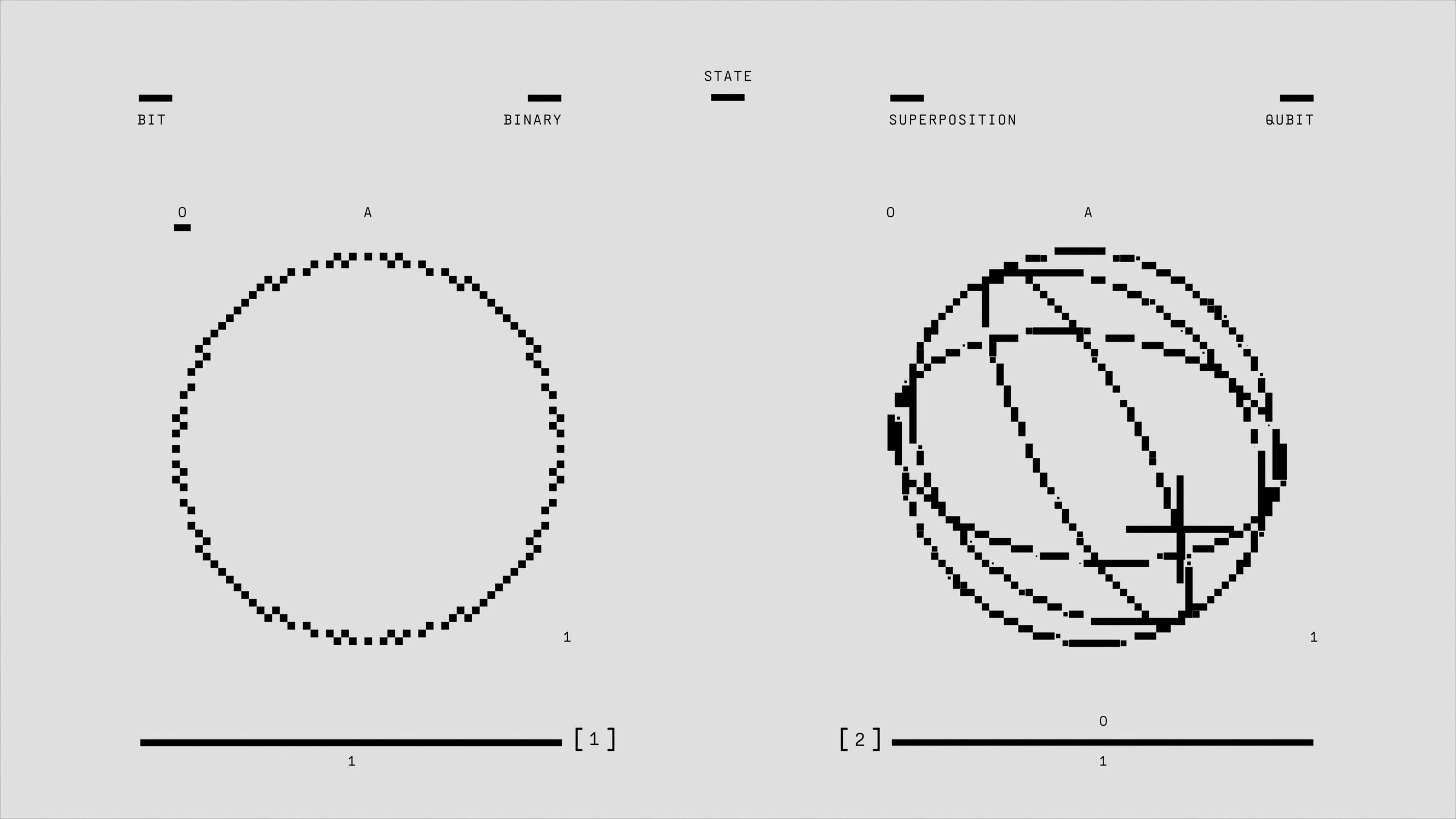
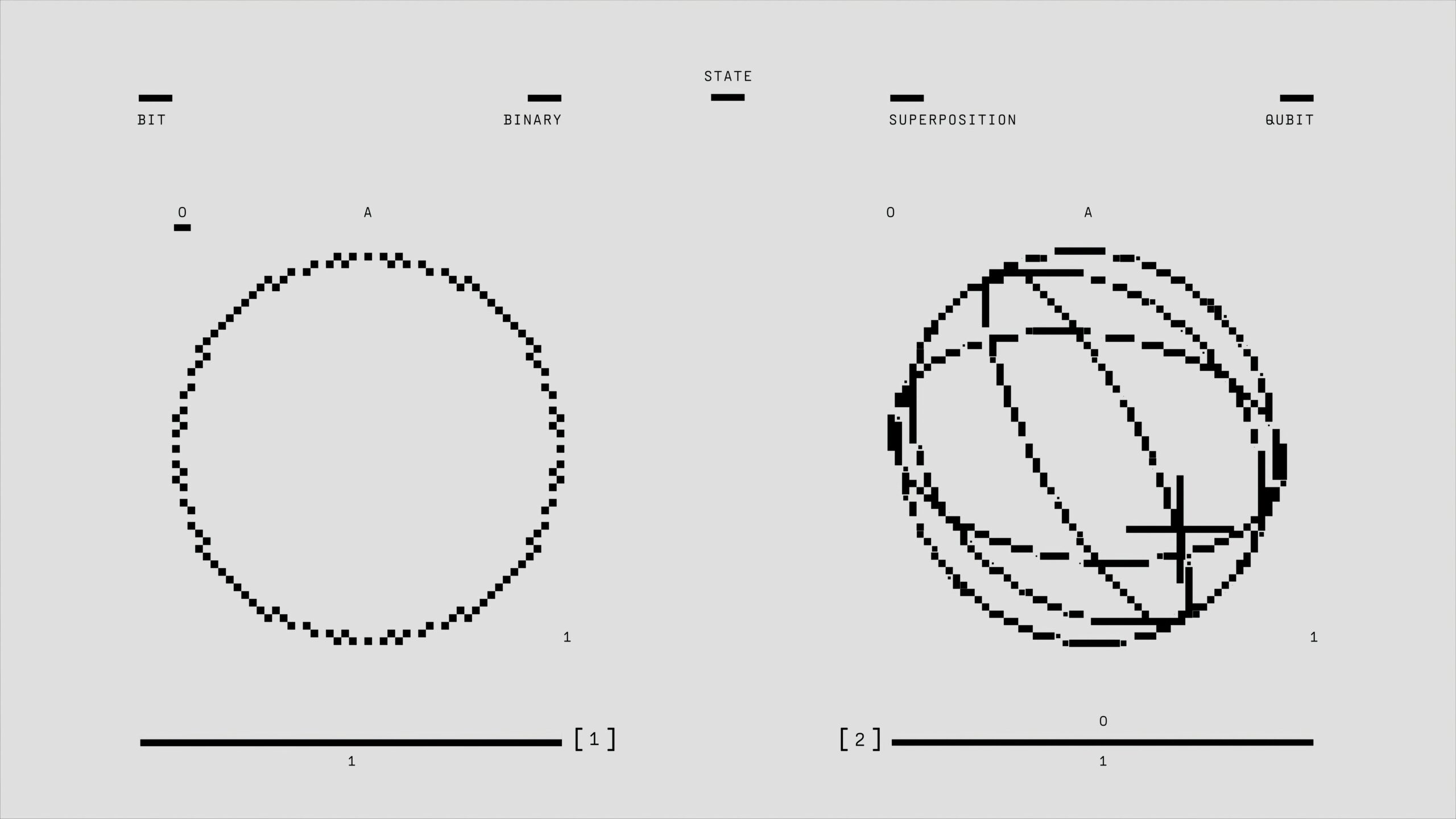
The world of quantum computing represents one of the most ambitious scientific endeavors of the 21st century. Unlike classical computers that process information in binary bits of zeros and ones, quantum computers harness the peculiar properties of quantum mechanics—superposition and entanglement—to perform calculations that would take conventional supercomputers millennia to complete. This fundamental shift in computational paradigm has sparked a global race among nations, research institutions, and technology giants to achieve quantum supremacy and unlock transformative applications across multiple sectors.
The promise of quantum technology extends far beyond raw processing power. From simulating molecular interactions for pharmaceutical development to optimizing complex logistics networks and breaking through the limitations of current encryption methods, quantum computing could fundamentally reshape our technological landscape. As governments and corporations worldwide invest billions into quantum research initiatives, we’re witnessing an unprecedented convergence of physics, computer science, and engineering that could define the next century of innovation.
🇺🇸 United States: Leading Through Strategic Investment
The United States has positioned itself as a quantum powerhouse through coordinated efforts between government agencies, academic institutions, and private sector innovators. The National Quantum Initiative Act, signed into law in 2018, committed over $1.2 billion to quantum research and development over five years. This legislation established multiple quantum research centers across the country, fostering collaboration between national laboratories, universities, and industry partners.
Major American technology companies have made substantial commitments to quantum advancement. IBM has developed publicly accessible quantum computers through its IBM Quantum Experience platform, allowing researchers and developers worldwide to experiment with quantum algorithms. Google achieved a significant milestone in 2019 when it announced quantum supremacy, demonstrating that its Sycamore processor could solve a specific problem exponentially faster than the world’s most powerful classical supercomputers.
Key American Quantum Initiatives
The Department of Energy has established five National Quantum Information Science Research Centers, each focusing on different aspects of quantum technology. These centers bring together leading scientists to tackle challenges in quantum networking, sensing, computing, and materials science. Meanwhile, the Defense Advanced Research Projects Agency (DARPA) continues to fund breakthrough research with potential military and security applications.
Academic institutions such as MIT, Caltech, and the University of Chicago host cutting-edge quantum research programs that attract top talent from around the globe. These universities serve as incubators for quantum startups and provide the foundational research that drives commercial applications. The ecosystem connecting government funding, academic research, and private enterprise creates a robust innovation pipeline that maintains America’s competitive edge in quantum technologies.
🇨🇳 China’s Quantum Ambitions: Investing in the Future
China has emerged as a formidable competitor in the quantum space, backed by massive government investment and strategic planning. The Chinese government has allocated approximately $15 billion toward quantum research, with the establishment of the National Laboratory for Quantum Information Sciences in Hefei representing one of the world’s largest quantum research facilities. This facility spans over 370,000 square meters and consolidates China’s quantum research efforts under one roof.
Chinese scientists have achieved remarkable breakthroughs in quantum communication and cryptography. In 2016, China launched the world’s first quantum satellite, Micius, which successfully demonstrated quantum key distribution over unprecedented distances. This achievement established China as a leader in quantum communication technology, with practical applications for creating unhackable communication networks.
Quantum Networks and Infrastructure
China has constructed the world’s longest quantum communication network, spanning over 2,000 kilometers between Beijing and Shanghai. This quantum backbone integrates with classical communication infrastructure to provide quantum-encrypted communication for government and financial institutions. The ambitious plan extends to establishing a global quantum communication network, positioning China as a potential provider of quantum-secure communications infrastructure worldwide.
Chinese tech giants including Alibaba, Baidu, and Huawei have established quantum computing divisions and laboratories. These companies work closely with academic institutions and benefit from government support to accelerate commercialization efforts. The integration of quantum research into China’s broader technological development strategy, including its Made in China 2025 initiative, ensures sustained momentum in quantum advancement.
🇪🇺 European Collaboration: Unity in Quantum Research
The European Union has adopted a collaborative approach to quantum technology development, launching the Quantum Flagship initiative in 2018 with a €1 billion budget over ten years. This program coordinates quantum research across member states, funding projects that range from fundamental physics to commercial applications. The initiative aims to consolidate Europe’s scientific leadership and translate quantum research into marketable technologies.
Individual European nations have also launched national quantum programs. Germany committed €2 billion to quantum technologies, establishing quantum computing centers and supporting quantum startups. The Netherlands hosts QuTech, a collaboration between Delft University of Technology and the Netherlands Organization for Applied Scientific Research, which has made significant progress in developing scalable quantum processors.
Cross-Border Quantum Initiatives
France announced a €1.8 billion national quantum strategy focusing on developing a complete quantum computer within five years. The United Kingdom invested £1 billion in its National Quantum Technologies Programme, establishing four quantum research hubs focused on computing, sensing, communications, and imaging. These national efforts complement the broader European Quantum Flagship, creating a distributed network of expertise across the continent.
European research excels particularly in quantum sensing and metrology applications. Projects like the development of quantum gravimeters for geological surveying and quantum magnetometers for medical diagnostics demonstrate Europe’s strength in translating quantum principles into practical devices. The emphasis on near-term applications alongside long-term quantum computing goals provides a balanced approach to quantum technology development.
🌏 Asia-Pacific Quantum Developments: Rising Innovation Hubs
Beyond China, several Asia-Pacific nations have established significant quantum research programs. Japan allocated substantial funding through its quantum technology innovation strategy, targeting practical applications in cybersecurity, materials development, and artificial intelligence. The University of Tokyo and RIKEN research institute lead Japanese efforts in quantum algorithm development and quantum-classical hybrid systems.
Australia has emerged as an unexpected quantum leader, with the Sydney Quantum Academy bringing together four universities to create a quantum talent pipeline. Australian researchers pioneered silicon-based quantum computing approaches, offering potential advantages in manufacturability using existing semiconductor fabrication techniques. The country’s quantum companies have attracted significant international investment, recognizing Australia’s unique contributions to quantum hardware development.
Regional Partnerships and Collaboration
Singapore established the Centre for Quantum Technologies at the National University of Singapore, attracting leading quantum physicists and fostering collaboration with international partners. South Korea announced a comprehensive quantum technology development plan with funding commitments extending through 2030, emphasizing quantum cryptography and quantum internet infrastructure.
These regional initiatives demonstrate that quantum technology development has become truly global. Countries recognize that leadership in quantum computing could provide strategic advantages in national security, economic competitiveness, and scientific prestige. The international nature of quantum research also fosters collaboration, with scientists frequently working across borders to solve fundamental challenges.
💼 Private Sector Quantum Innovation: Corporate Competition
Technology giants view quantum computing as a potential paradigm shift comparable to the development of classical computers or the internet. Microsoft’s Azure Quantum platform provides cloud-based access to quantum hardware from multiple providers, creating an ecosystem for quantum software development. The company’s topological qubit approach represents a distinct architectural strategy that could offer advantages in error correction and scalability.
Amazon entered the quantum space through Amazon Braket, a fully managed quantum computing service that allows researchers to experiment with different quantum computing technologies. This approach reflects Amazon’s cloud computing expertise, positioning quantum computing as a service that organizations can access without investing in physical hardware.
Quantum Startups and Investment Landscape
Venture capital has flowed into quantum startups at an accelerating pace. Companies like Rigetti Computing, IonQ, and D-Wave Systems raised hundreds of millions in funding to develop commercial quantum computers. IonQ became the first publicly traded pure-play quantum computing company, signaling investor confidence in the sector’s commercial potential despite the technology remaining largely pre-commercial.
The diversity of quantum computing approaches—superconducting qubits, trapped ions, photonic systems, neutral atoms, and silicon spin qubits—reflects continued uncertainty about which technology will ultimately prove most practical. This technological pluralism drives innovation as different companies and research groups pursue distinct paths toward scalable quantum computing. The competition between approaches accelerates progress while hedge bets across multiple technologies.
🔬 Quantum Applications: From Theory to Practice
Drug discovery represents one of the most promising near-term applications for quantum computing. Pharmaceutical companies partner with quantum computing providers to simulate molecular interactions that determine how drugs bind to proteins. Classical computers struggle with these simulations due to the exponential complexity of modeling quantum mechanical systems, making quantum computers naturally suited for this challenge.
Financial services institutions explore quantum algorithms for portfolio optimization, risk analysis, and fraud detection. The ability to evaluate vast numbers of scenarios simultaneously could revolutionize financial modeling and trading strategies. JPMorgan Chase, Goldman Sachs, and other major banks have established quantum research teams and partnerships with quantum computing companies.
Optimization and Machine Learning
Logistics and supply chain optimization could benefit enormously from quantum computing capabilities. Companies like Volkswagen and Airbus experiment with quantum algorithms to optimize traffic flow and aircraft design respectively. The ability to find optimal solutions among countless possibilities could improve efficiency across industries that depend on complex optimization.
Quantum machine learning represents an emerging field combining quantum computing with artificial intelligence. Researchers investigate whether quantum computers could accelerate machine learning training or enable entirely new classes of learning algorithms. While practical quantum advantages for machine learning remain to be demonstrated, the theoretical potential drives significant research investment.
🛡️ Quantum Security: The Cryptography Challenge
The development of quantum computers poses an existential threat to current encryption methods. Widely used public-key cryptography systems that secure internet communications, financial transactions, and classified information could become vulnerable to quantum attacks. A sufficiently powerful quantum computer could break RSA and elliptic curve cryptography, potentially compromising decades of encrypted data.
This threat has sparked urgent development of post-quantum cryptography—encryption methods resistant to attacks from both classical and quantum computers. The National Institute of Standards and Technology initiated a standardization process to identify and recommend post-quantum cryptographic algorithms. Organizations must begin transitioning to quantum-resistant encryption even before large-scale quantum computers exist, as adversaries could store encrypted data today and decrypt it once quantum computers become available.
Quantum Key Distribution Networks
Quantum key distribution offers a complementary approach to encryption security by using quantum mechanics principles to detect eavesdropping attempts. Several countries have deployed quantum key distribution networks for secure government and financial communications. While these networks require specialized infrastructure and work over limited distances, they provide provably secure communication channels that remain safe even against future quantum computers.
The race between quantum computing development and post-quantum cryptography deployment creates significant uncertainty for cybersecurity planning. Organizations must balance the unknown timeline for practical quantum computers against the substantial effort required to update cryptographic systems across their infrastructure. Government agencies worldwide issue guidance on quantum readiness, urging organizations to inventory cryptographic dependencies and develop transition strategies.
🎓 Quantum Workforce Development: Preparing for the Future
The quantum technology sector faces a critical shortage of qualified professionals. Quantum computing requires expertise spanning quantum physics, computer science, mathematics, and engineering—a rare combination. Universities worldwide have responded by creating specialized quantum information science programs at undergraduate and graduate levels, but workforce development lags behind industry demand.
Educational initiatives aim to build a quantum-literate workforce at multiple levels. Programs introduce quantum concepts to high school students while retraining professionals from adjacent fields. Online courses and certifications from universities and companies make quantum education accessible to broader audiences. Quantum programming languages and development tools lower entry barriers for software developers without deep physics backgrounds.
International Talent Competition
Countries recognize that attracting and retaining quantum talent provides competitive advantages in technology development. Immigration policies, research funding, and academic opportunities all influence where leading quantum scientists and engineers choose to work. The global nature of quantum research means that breakthroughs in one country quickly disseminate internationally through publications and conferences, but centers of excellence that concentrate talent can accelerate practical development and commercialization.
Industry partnerships with universities create pipelines supplying companies with quantum-trained graduates. Internship programs, collaborative research projects, and industry-sponsored courses align academic training with practical needs. As quantum computing transitions from research laboratories toward commercial applications, workforce development becomes increasingly critical for translating scientific breakthroughs into marketable products and services.

🚀 The Quantum Future: Challenges and Opportunities Ahead
Despite remarkable progress, significant technical challenges remain before quantum computers achieve their transformative potential. Quantum error correction requires substantial overhead, with estimates suggesting hundreds or thousands of physical qubits needed to create a single logical qubit reliable enough for practical calculations. Scaling quantum systems while maintaining coherence and reducing error rates represents formidable engineering challenges.
The timeline for practical quantum advantage in commercially relevant applications remains uncertain. While quantum supremacy demonstrations prove quantum computers can outperform classical systems on specific tasks, these tasks generally lack practical utility. Identifying applications where quantum computers provide meaningful advantages over classical systems, and developing the algorithms and hardware to realize those advantages, continues to drive research efforts worldwide.
International collaboration and competition will shape quantum technology development trajectories. Scientific cooperation accelerates fundamental discoveries while geopolitical competition drives investment and urgency. Standards development for quantum computing systems, programming interfaces, and communication protocols will determine whether diverse quantum platforms can interoperate or remain siloed ecosystems.
The convergence of quantum computing with other emerging technologies like artificial intelligence, 5G networks, and advanced materials science could create synergistic innovations beyond what any technology achieves individually. As quantum research initiatives worldwide continue pushing boundaries, humanity stands at the threshold of a quantum revolution that could redefine computational possibilities and unlock solutions to currently intractable problems across science, medicine, finance, and countless other domains.