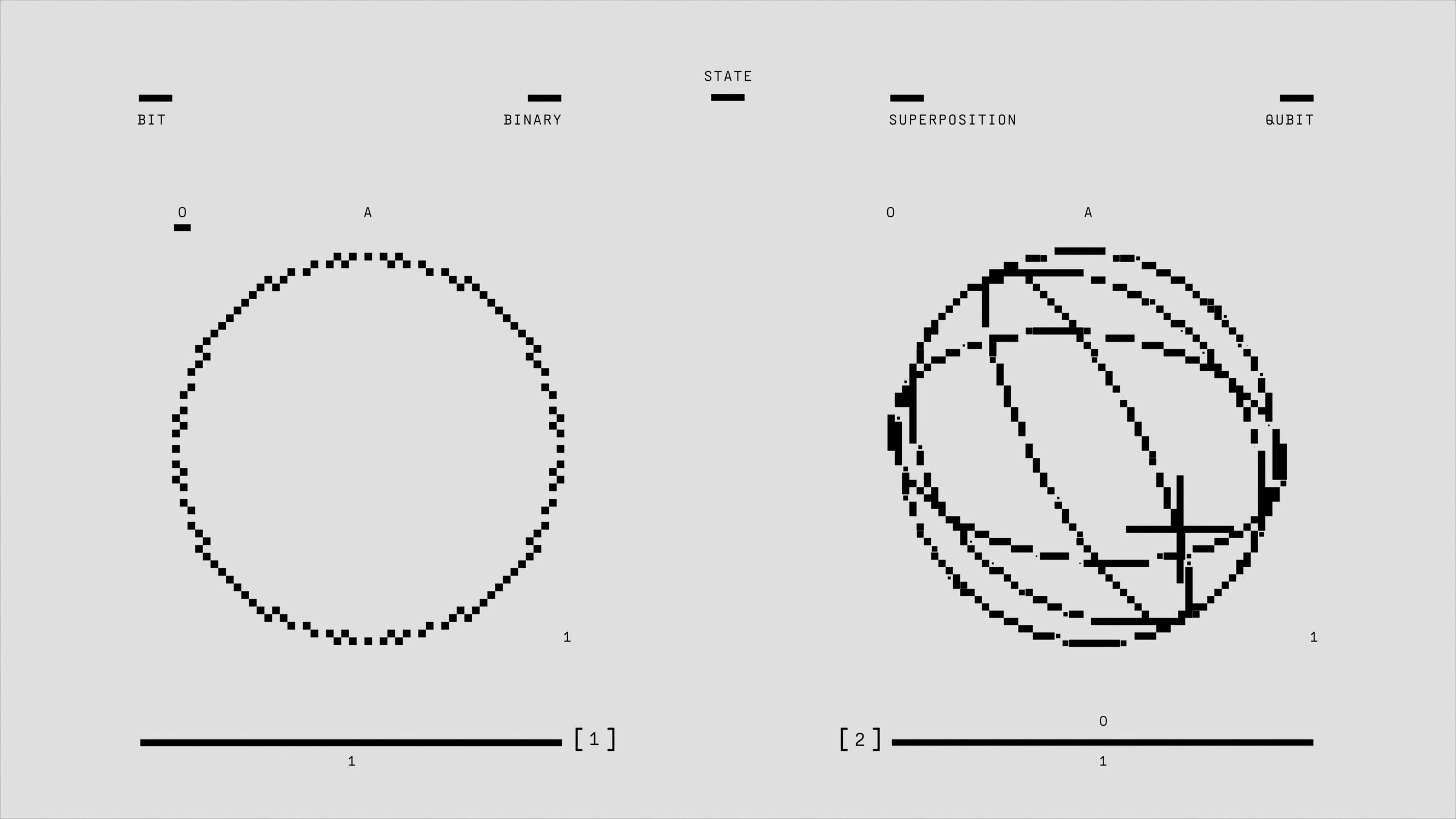
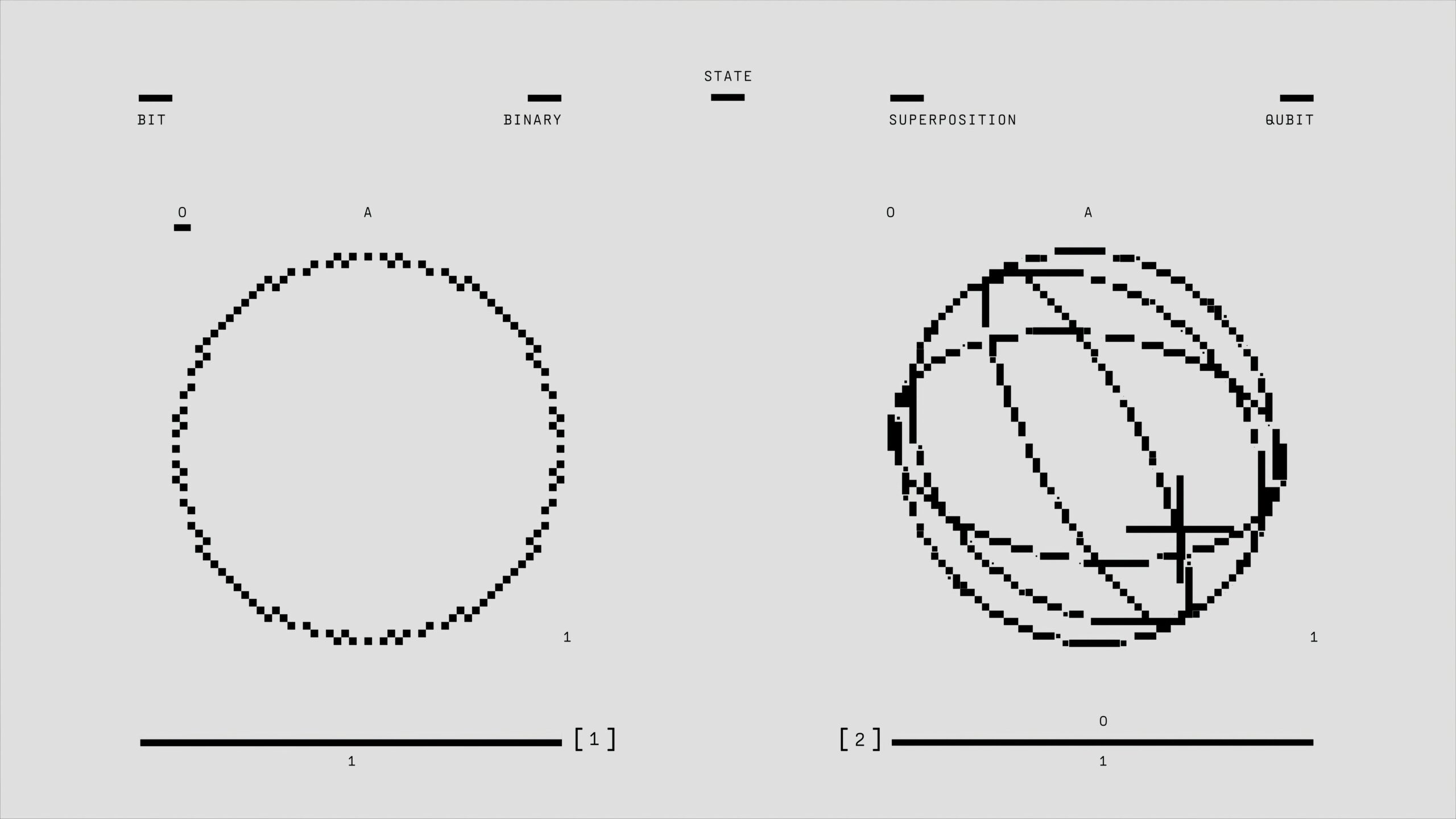
Quantum information science represents one of humanity’s most profound intellectual adventures, merging physics, mathematics, and computer science into a revolutionary field that promises to transform our technological landscape.

🔬 The Dawn of Quantum Mechanics: Setting the Stage
The story of quantum information science begins in the early 20th century, when physicists first encountered phenomena that classical physics couldn’t explain. Max Planck’s 1900 discovery that energy exists in discrete packets, or “quanta,” marked the birth of quantum theory. This revolutionary idea challenged centuries of classical thinking and laid the groundwork for what would eventually become quantum information science.
Albert Einstein’s explanation of the photoelectric effect in 1905 further demonstrated the particle nature of light, earning him the Nobel Prize and reinforcing the quantum hypothesis. Niels Bohr’s atomic model, introduced in 1913, showed that electrons occupy specific energy levels, introducing the concept of quantum jumps that would later prove crucial to understanding quantum computation.
The 1920s witnessed an explosion of theoretical developments. Werner Heisenberg’s uncertainty principle revealed fundamental limits to what we can know about quantum systems simultaneously. Erwin Schrödinger’s wave equation provided a mathematical framework for describing quantum states, while his famous thought experiment involving a cat highlighted the paradoxical nature of quantum superposition.
🌟 The Einstein-Podolsky-Rosen Paradox: Quantum Entanglement Emerges
In 1935, Albert Einstein, Boris Podolsky, and Nathan Rosen published a paper that would inadvertently become foundational to quantum information science. The EPR paradox, as it became known, questioned whether quantum mechanics provided a complete description of reality. They described what Einstein dismissively called “spooky action at a distance” – the phenomenon we now recognize as quantum entanglement.
This peculiar correlation between particles, regardless of the distance separating them, seemed to violate local realism. Einstein believed this demonstrated that quantum mechanics was incomplete, that there must be hidden variables determining particle behavior. However, this “flaw” would later become quantum information science’s most powerful resource.
John Bell’s theorem in 1964 provided a way to experimentally test whether hidden variables could explain quantum correlations. Bell inequalities established mathematical constraints that any local hidden variable theory must satisfy. Subsequent experiments, particularly those by Alain Aspect in the 1980s, consistently violated these inequalities, confirming that quantum entanglement was genuine and non-local.
💻 The Birth of Quantum Information Theory
The 1980s marked the true genesis of quantum information science as a distinct field. In 1981, Richard Feynman delivered a groundbreaking lecture at MIT, proposing that quantum systems could simulate other quantum systems more efficiently than classical computers. This insight suggested that quantum mechanics wasn’t just a description of nature – it could be a computational resource.
Paul Benioff independently developed theoretical models for quantum mechanical computers around the same time. His work demonstrated that computation could theoretically be performed reversibly using quantum mechanics, avoiding the thermodynamic costs associated with information erasure in classical systems.
David Deutsch made perhaps the most significant conceptual leap in 1985 when he described the universal quantum computer. Deutsch showed that a quantum computer could perform any calculation that a classical computer could, plus additional calculations that would be impossibly difficult for classical machines. His quantum Turing machine concept established the theoretical foundation for quantum computation.
🚀 Quantum Algorithms: Proving the Power
The field remained largely theoretical until Peter Shor dropped a bombshell in 1994. Shor’s algorithm demonstrated that a quantum computer could factor large numbers exponentially faster than the best-known classical algorithms. This discovery had immediate implications for cryptography, as most internet security relies on the difficulty of factoring large numbers.
Shor’s algorithm transformed quantum computing from an academic curiosity into a matter of national security and commercial interest. Governments and corporations suddenly recognized that quantum computers could break current encryption schemes, driving massive investment in both quantum computing research and post-quantum cryptography.
In 1996, Lov Grover introduced another revolutionary algorithm for searching unsorted databases. While Grover’s algorithm offers only a quadratic speedup compared to Shor’s exponential advantage, it applies to a broader class of problems and demonstrates quantum computing’s versatility.
🔐 Quantum Cryptography: Unbreakable Communication
While quantum computers threatened existing cryptographic systems, quantum mechanics also enabled provably secure communication. Charles Bennett and Gilles Brassard developed the BB84 protocol in 1984, the first quantum key distribution scheme that allows two parties to establish a shared secret key with security guaranteed by the laws of physics.
Unlike classical cryptography, which relies on computational difficulty, quantum cryptography’s security stems from fundamental quantum properties. Any eavesdropper attempting to intercept quantum-encrypted communications inevitably disturbs the quantum states, revealing their presence. This makes quantum key distribution theoretically immune to any computational advances, including quantum computers.
Artur Ekert proposed an alternative approach in 1991, using entangled particles for key distribution. Ekert’s protocol connected quantum cryptography directly to Bell’s theorem, enabling security verification through violation of Bell inequalities. This elegant scheme demonstrated how quantum entanglement could serve as both a cryptographic resource and a security guarantee.
⚛️ Building Quantum Computers: From Theory to Hardware
Translating quantum information theory into physical quantum computers presented enormous challenges. Quantum systems are notoriously fragile, with environmental interactions causing decoherence that destroys quantum information. Researchers needed to identify physical systems that could maintain quantum coherence long enough for meaningful computation.
Multiple platforms emerged as potential quantum computer architectures. Ion traps use electromagnetic fields to confine individual ions, manipulating their quantum states with laser pulses. This approach achieved early successes, with David Wineland and colleagues demonstrating basic quantum logic gates in the 1990s.
Superconducting circuits represent another promising approach. These devices exploit the quantum properties of superconducting materials to create artificial atoms called qubits. Companies like IBM, Google, and Rigetti have invested heavily in superconducting quantum processors, achieving increasingly sophisticated demonstrations.
Other platforms include photonic systems using individual light particles, neutral atoms trapped in optical lattices, and topological qubits based on exotic quantum states. Each approach has distinct advantages and challenges, and the optimal architecture for large-scale quantum computers remains an open question.
📊 Quantum Error Correction: Protecting Fragile Information
A major breakthrough came in the mid-1990s with the development of quantum error correction codes. Peter Shor and Andrew Steane independently discovered that quantum information could be protected against errors by encoding it across multiple physical qubits. This seemed paradoxical, as quantum states cannot be copied (the no-cloning theorem), yet it works through clever entanglement patterns.
Quantum error correction requires encoding each logical qubit into many physical qubits, creating redundancy that enables error detection and correction without directly measuring the quantum information. The threshold theorem, proven in the late 1990s, established that arbitrarily long quantum computations are possible if physical error rates fall below a certain threshold.
Recent advances in quantum error correction have been remarkable. Google demonstrated quantum error correction that actually reduces error rates below component error rates in 2023, marking a crucial milestone. These developments suggest that fault-tolerant quantum computers, once considered purely theoretical, may be achievable with current technology.
🎯 The NISQ Era: Noisy Intermediate-Scale Quantum Devices
John Preskill coined the term “NISQ” (Noisy Intermediate-Scale Quantum) in 2018 to describe the current generation of quantum computers. NISQ devices contain 50-1000 qubits without full error correction, representing a middle ground between early proof-of-concept experiments and future fault-tolerant quantum computers.
Despite their limitations, NISQ devices have achieved remarkable demonstrations. In 2019, Google claimed “quantum supremacy” (now often called “quantum advantage”), performing a specific calculation faster than the world’s most powerful supercomputers. While the practical utility of this particular calculation was limited, it proved that quantum computers could exceed classical capabilities in certain domains.
Researchers are exploring variational quantum algorithms specifically designed for NISQ devices. These hybrid quantum-classical algorithms, like the Variational Quantum Eigensolver (VQE), use shallow quantum circuits that minimize decoherence while still leveraging quantum properties for computational advantage.
🌐 Quantum Networks: The Quantum Internet Vision
Quantum information science extends beyond computation to quantum communication networks. The vision of a “quantum internet” involves connecting quantum computers and sensors through quantum channels that distribute entanglement and enable quantum communication protocols.
Quantum repeaters represent a critical technology for long-distance quantum communication. Unlike classical signals, quantum states cannot be amplified without destroying quantum information. Quantum repeaters use entanglement swapping and quantum memories to extend quantum communication ranges without directly measuring quantum states.
Several countries have deployed quantum communication networks. China launched the Micius satellite in 2016, demonstrating satellite-based quantum key distribution over thousands of kilometers. Europe’s Quantum Communication Infrastructure initiative aims to connect quantum networks across the continent. These developments move quantum communication from laboratory demonstrations toward practical deployment.
🔬 Applications Transforming Industries
Quantum simulation represents one of the most promising near-term applications. Richard Feynman’s original vision was to simulate quantum systems like molecules and materials. Quantum computers naturally represent quantum mechanical behavior, potentially revolutionizing drug discovery, materials science, and chemistry.
Optimization problems pervade industry, from logistics to finance. Quantum annealing devices, pioneered by D-Wave Systems, specifically target optimization tasks. While debate continues about their quantum advantages, these specialized quantum processors demonstrate practical quantum computing applications.
Machine learning and artificial intelligence represent another active research area. Quantum machine learning algorithms could potentially process high-dimensional data more efficiently than classical approaches. Researchers are exploring quantum neural networks, quantum support vector machines, and quantum generative models.
🎓 Educational Evolution and Workforce Development
As quantum information science matures, educational initiatives have proliferated. Universities worldwide now offer quantum computing courses and degree programs. Online platforms provide accessible quantum computing education, with IBM’s Qiskit, Google’s Cirq, and Microsoft’s Q# enabling hands-on quantum programming experience.
The quantum workforce shortage presents both challenges and opportunities. Demand for quantum-skilled professionals far exceeds supply, creating opportunities for physicists, computer scientists, mathematicians, and engineers to enter this emerging field. Interdisciplinary training combining quantum mechanics, computer science, and practical engineering has become essential.
🌟 Contemporary Challenges and Future Horizons
Despite remarkable progress, significant challenges remain. Scaling quantum computers to millions of qubits necessary for practical applications requires solving formidable engineering problems. Decoherence times must improve, error rates must decrease, and control systems must become more sophisticated.
The development of quantum algorithms remains crucial. We’ve discovered powerful algorithms for specific problems, but whether quantum computers offer advantages for broader problem classes remains uncertain. Identifying new quantum algorithms and understanding quantum computational complexity represent active research frontiers.
Standardization efforts are underway to ensure quantum technologies develop coherently. Organizations like IEEE and ISO are developing quantum computing standards, while governments establish quantum technology roadmaps. These coordination efforts aim to accelerate development while ensuring interoperability and security.
🚀 The Road Ahead: Quantum’s Revolutionary Promise
The future of quantum information science appears brilliantly uncertain. Conservative estimates suggest fault-tolerant quantum computers may arrive within 10-20 years, while optimists predict sooner breakthroughs. Regardless of timeline, the trajectory is clear: quantum information science will fundamentally transform computation, communication, and sensing.
Beyond technological applications, quantum information science has deepened our understanding of nature itself. Quantum entanglement, once considered a philosophical puzzle, has become a practical resource. The field demonstrates how abstract theoretical physics can yield revolutionary technologies, continuing humanity’s long tradition of turning scientific understanding into technological capability.
As quantum information science evolves from laboratory curiosity to transformative technology, it carries profound implications for society. Quantum-safe cryptography must protect data security, ethical frameworks must guide quantum technology development, and educational systems must prepare future generations for a quantum-enabled world. The mysteries we’ve unraveled have revealed new mysteries to explore, ensuring that the quantum journey continues into an exciting and unpredictable future.