Industrial ecology and systems thinking are transforming how industries approach sustainability, offering a blueprint for a regenerative future where waste becomes resource.

🌍 The Convergence of Two Revolutionary Frameworks
The industrial landscape stands at a critical crossroads. Traditional linear models of production—take, make, dispose—have driven economic growth for centuries but at an unsustainable environmental cost. Industrial ecology and systems thinking emerge as complementary frameworks that fundamentally challenge this paradigm, offering instead a circular, interconnected approach to resource management and production processes.
Industrial ecology mimics natural ecosystems, where nothing goes to waste. In nature, one organism’s waste becomes another’s food, creating closed-loop systems that maintain balance over millennia. Systems thinking, meanwhile, provides the analytical lens to understand these complex interactions, recognizing that individual components cannot be understood in isolation from the whole system they comprise.
Together, these frameworks form a powerful methodology for redesigning industrial processes. They shift focus from optimizing individual components to optimizing entire systems, from minimizing single pollutants to eliminating waste concepts altogether, and from short-term efficiency gains to long-term resilience and regeneration.
Understanding Industrial Ecology: Nature as the Ultimate Engineer
Industrial ecology represents a fundamental reimagining of industrial processes through the lens of natural systems. The discipline emerged in the late 1980s and early 1990s, gaining prominence through seminal works that questioned whether industrial systems could function more like natural ecosystems.
At its core, industrial ecology seeks to create closed-loop systems where materials circulate continuously, energy is used efficiently, and waste is systematically eliminated. This approach requires examining entire product lifecycles—from raw material extraction through manufacturing, distribution, use, and end-of-life management.
The Kalundborg Symbiosis in Denmark exemplifies this principle perfectly. This industrial ecosystem connects multiple companies and the local municipality in a network of resource exchanges. Excess heat from a power plant warms homes and fish farms. Gypsum from the plant’s scrubbers becomes raw material for wallboard production. Fly ash is used in cement manufacturing. What was once waste has become valuable input, creating economic value while dramatically reducing environmental impact.
The Four Pillars of Industrial Ecology
Industrial ecology rests on several foundational principles that guide its application across diverse industrial contexts:
- Material Flow Analysis: Tracking materials and energy through entire systems to identify inefficiencies and opportunities for循環利用
- Life Cycle Assessment: Evaluating environmental impacts across all stages of a product’s existence
- Design for Environment: Incorporating environmental considerations into product and process design from conception
- Industrial Symbiosis: Creating collaborative networks where companies exchange resources and byproducts
Systems Thinking: Seeing the Forest and the Trees
Systems thinking provides the cognitive framework necessary to implement industrial ecology effectively. Developed by thinkers like Jay Forrester, Donella Meadows, and Peter Senge, systems thinking recognizes that complex problems cannot be solved by addressing symptoms in isolation. Instead, it emphasizes understanding relationships, feedback loops, and emergent properties that arise from system interactions.
In sustainability contexts, systems thinking reveals how seemingly unrelated factors interconnect. A decision to source cheaper materials might reduce immediate costs but could create downstream problems in product quality, worker safety, or environmental impact. Systems thinking tools help map these connections, making invisible relationships visible and manageable.
Feedback loops represent a crucial systems thinking concept. Reinforcing loops amplify changes, either positive or negative. Balancing loops stabilize systems by counteracting changes. Understanding these dynamics helps predict system behavior and design effective interventions. For instance, a company implementing waste reduction might trigger a reinforcing loop: lower waste disposal costs free capital for further sustainability investments, which reduce waste further, creating a virtuous cycle.
Leverage Points: Small Changes, Big Impact
Donella Meadows identified twelve leverage points—places within complex systems where small shifts can produce significant changes. The most powerful leverage points involve changing system goals, paradigms, and the power to transcend paradigms. In industrial contexts, this might mean shifting from profit maximization to value creation that includes environmental and social benefits.
Less powerful but still significant leverage points include material stocks and flows, feedback loop strengths, and information flows. A company might redesign information systems to make environmental impacts visible to decision-makers in real-time, fundamentally altering how choices are made throughout the organization.
🔄 Circular Economy: Industrial Ecology in Practice
The circular economy represents industrial ecology’s most visible application. This economic model designs out waste and pollution, keeps products and materials in use, and regenerates natural systems. Major corporations and entire nations have embraced circular economy principles as pathways to sustainable prosperity.
The Ellen MacArthur Foundation has championed circular economy concepts globally, working with businesses to redesign products, services, and business models. Their work demonstrates that circularity isn’t just environmentally beneficial—it creates economic opportunity. By keeping materials in use longer, companies reduce raw material costs, improve customer relationships through product-as-service models, and access new revenue streams from material recovery.
Interface, the global flooring manufacturer, exemplifies circular economy principles in action. Their Mission Zero initiative aimed to eliminate any negative environmental impact by 2020. They redesigned products to be recyclable, created take-back programs for old carpets, and developed innovative manufacturing processes that dramatically reduced waste and emissions. The result? Significant cost savings alongside environmental benefits, proving that sustainability and profitability can align.
Digital Technologies: Accelerating the Transformation
Digital technologies are supercharging the implementation of industrial ecology and systems thinking. Internet of Things sensors, artificial intelligence, blockchain, and advanced analytics enable unprecedented visibility into material flows, energy consumption, and system dynamics.
Smart manufacturing systems use real-time data to optimize resource use dynamically. AI algorithms identify patterns and inefficiencies that humans might miss, suggesting process improvements that reduce waste and energy consumption. Digital twins—virtual replicas of physical systems—allow companies to test interventions and predict outcomes before implementing changes in the real world.
Blockchain technology facilitates circular economy models by creating transparent, traceable supply chains. When every material transaction is recorded immutably, companies can verify recycled content claims, track products for end-of-life recovery, and create marketplaces for industrial byproducts with confidence in material provenance and quality.
Data-Driven Material Flow Management
Advanced analytics transform material flow analysis from periodic assessments to continuous optimization. Companies can now track materials throughout complex global supply chains, identifying bottlenecks, inefficiencies, and opportunities for circularity that were previously invisible.
Predictive maintenance, enabled by IoT sensors and machine learning, prevents equipment failures that often result in material waste and energy inefficiency. By predicting when machinery requires maintenance, companies avoid unexpected breakdowns and extend equipment lifespans, reducing the materials and energy needed for replacement manufacturing.
🏭 Industrial Symbiosis Networks: Collaboration for Sustainability
Industrial symbiosis represents perhaps the most direct application of ecological thinking to industry. These networks connect diverse organizations in resource exchanges that create economic and environmental value. What one company discards, another uses as raw material, mimicking natural ecosystems where waste doesn’t exist.
Successful industrial symbiosis requires several elements: geographic proximity to reduce transportation impacts, diversity of industries to increase exchange possibilities, trusted relationships that enable information sharing, and supportive policy frameworks that encourage rather than hinder unconventional resource flows.
The National Industrial Symbiosis Programme in the United Kingdom facilitated thousands of resource synergies over its operation, diverting millions of tonnes of materials from landfills while generating hundreds of millions in cost savings and new revenue. This success demonstrates that structured programs can accelerate symbiosis development beyond organic emergence.
Overcoming Barriers to Industrial Symbiosis
Despite its promise, industrial symbiosis faces obstacles. Regulatory frameworks often categorize all byproducts as waste, requiring expensive compliance measures that make exchanges economically unviable. Companies may hesitate to share production information with potential partners due to competitive concerns. Technical challenges arise when materials require processing before reuse.
Addressing these barriers requires multi-stakeholder collaboration. Governments can modernize regulations to distinguish between genuine waste and potential resources. Industry associations can create trusted platforms for identifying symbiosis opportunities while protecting sensitive information. Research institutions can develop technologies that economically process byproducts for secondary use.
Designing Products for Circular Systems
Product design determines much of an item’s environmental impact throughout its lifecycle. Design for environment principles embed sustainability considerations from conception, considering material selection, manufacturing processes, product longevity, ease of repair, and end-of-life recovery.
Modular design allows component replacement rather than product disposal when individual parts fail. Standardized components across product lines improve repair economics and facilitate material recovery. Material selection prioritizes renewable, recycled, and recyclable inputs while avoiding hazardous substances that complicate end-of-life processing.
Fairphone demonstrates these principles in practice. This smartphone company designs products for longevity and repairability, using modular construction that allows users to replace individual components easily. They prioritize ethical material sourcing and publish detailed information about their supply chain and environmental impact, challenging industry norms and proving that different approaches are possible.
⚡ Energy Systems: The Renewable Foundation
Transitioning to renewable energy forms the foundation of sustainable industrial ecology. While optimizing material flows and creating circular systems reduce environmental impact significantly, fossil fuel dependence undermines these gains through climate change contributions.
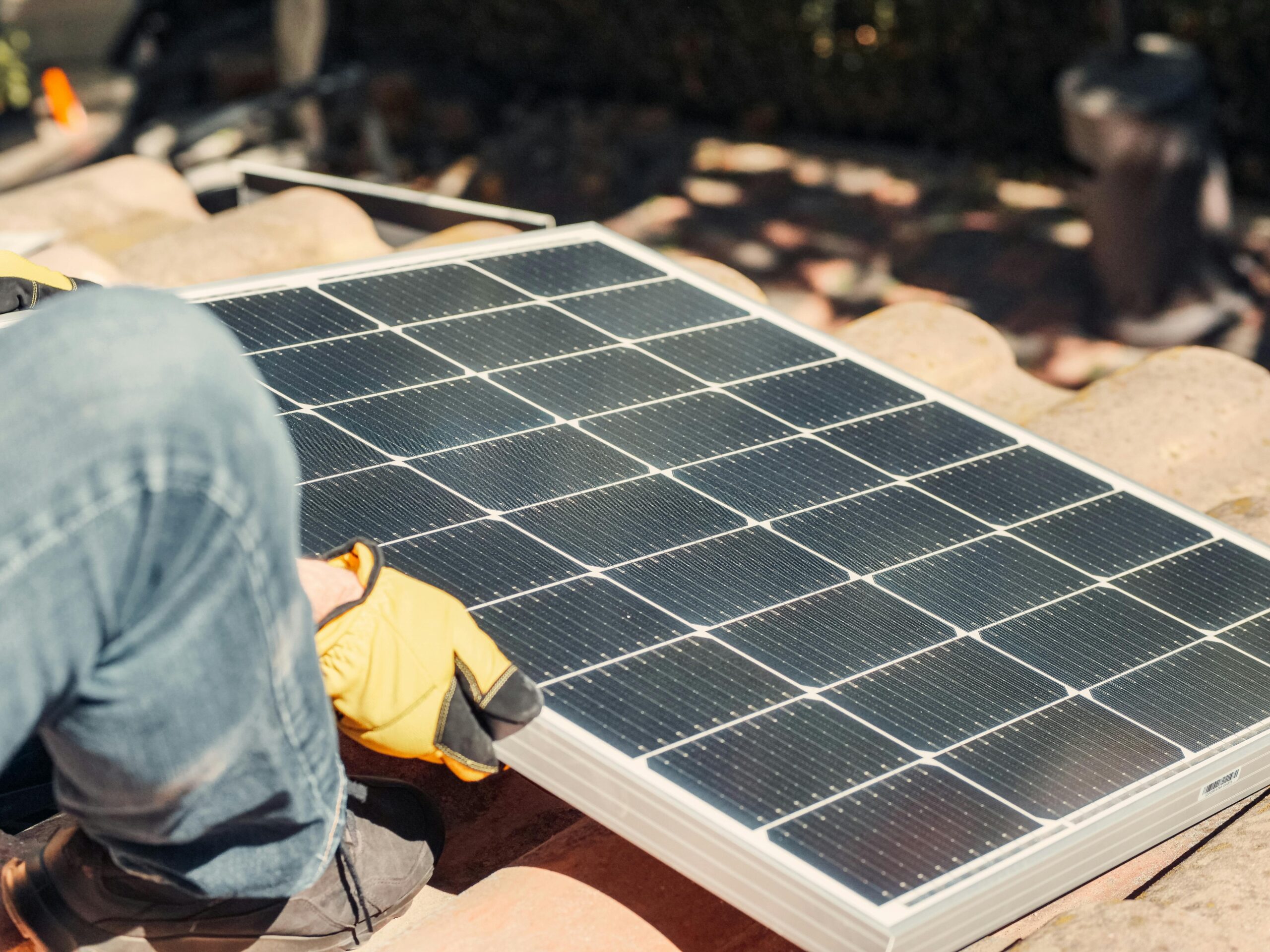
Industrial facilities increasingly integrate on-site renewable generation, reducing transmission losses and improving energy security. Solar panels on warehouse roofs, wind turbines at manufacturing sites, and industrial-scale battery storage create resilient, low-carbon energy systems. Combined with energy efficiency improvements, these measures dramatically reduce industrial carbon footprints.
Process heat represents a significant industrial energy demand often overlooked in renewable energy discussions. Innovative solutions like concentrated solar thermal systems, electric resistance heating powered by renewables, and green hydrogen are emerging as viable alternatives to natural gas for industrial heating applications.
Measuring Success: Metrics That Matter
Effective implementation of industrial ecology and systems thinking requires appropriate metrics. Traditional financial accounting captures only limited aspects of system performance, often missing crucial environmental and social dimensions. Comprehensive sustainability measurement integrates multiple indicators across environmental, economic, and social categories.
Life cycle assessment quantifies environmental impacts across product lifecycles, from resource extraction through end-of-life. Material circularity indicators measure how effectively materials cycle through systems rather than becoming waste. Carbon footprint accounting tracks greenhouse gas emissions across entire value chains. Water footprint analysis reveals direct and indirect water consumption and contamination.
Beyond environmental metrics, social sustainability indicators assess working conditions, community impacts, and equity considerations. Economic metrics evolve beyond simple profit to include value creation across stakeholder groups and long-term resilience measures.
🌱 The Path Forward: Scaling Sustainability
Transforming isolated successes into systemic change requires coordinated action across multiple levels. Individual companies pioneering sustainable practices demonstrate feasibility and develop best practices. Industry collaborations through symbiosis networks and shared standards accelerate adoption. Policy frameworks create enabling environments that reward sustainability rather than penalizing it.
Education plays a crucial role in this transformation. Engineers, designers, business leaders, and policymakers need literacy in industrial ecology and systems thinking to embed these approaches throughout decision-making processes. Universities are increasingly integrating sustainability into curricula across disciplines, preparing the next generation for this transition.
Financial systems must evolve to support sustainable industrial transformation. Traditional investment timelines and return expectations often conflict with sustainability initiatives that generate value over longer periods. Green bonds, sustainability-linked loans, and impact investing represent emerging financial instruments aligned with long-term sustainability goals.
Embracing Complexity, Creating Resilience
Industrial ecology and systems thinking don’t promise simple solutions. They reveal complexity, showing how industrial systems interconnect with environmental and social systems in ways that resist reductionist approaches. This complexity, however, isn’t a problem to overcome but a reality to embrace.
Systems designed with complexity in mind demonstrate greater resilience to disruption. Diverse supplier networks withstand individual supplier failures better than optimized single-source approaches. Circular material flows reduce vulnerability to raw material price volatility and supply disruptions. Distributed renewable energy systems prove more resilient than centralized fossil fuel infrastructure.
The COVID-19 pandemic starkly revealed fragilities in globally optimized supply chains. Companies with systems thinking perspectives and diversified, circular approaches weathered disruptions more effectively, demonstrating that sustainability and resilience align rather than conflict.
💡 Catalyzing the Revolution
Revolutionizing sustainability through industrial ecology and systems thinking isn’t merely about environmental protection—it represents a fundamental reimagining of industrial civilization’s relationship with natural systems. This transformation creates opportunities for innovation, competitive advantage, and meaningful work addressing humanity’s greatest challenges.
The transition is already underway. Forward-thinking companies recognize that sustainability drives innovation rather than constraining it. Governments are establishing policy frameworks that accelerate rather than hinder this shift. Technologies enabling circular, efficient systems are rapidly advancing. Public awareness and demand for sustainable products and practices continue growing.
Success requires moving beyond incremental improvements to embrace transformative change. It demands collaboration across traditional boundaries—between competitors, across industries, spanning public and private sectors. It requires long-term thinking in systems dominated by quarterly reporting cycles. Most fundamentally, it requires recognizing that economic prosperity, environmental health, and social wellbeing are interdependent rather than competing priorities.
Industrial ecology and systems thinking provide the frameworks, tools, and inspiration for this revolution. The question is no longer whether transformation is possible, but how quickly we can scale proven approaches to create resilient, regenerative industrial systems that support human flourishing within planetary boundaries. The power to unleash this transformation lies in collective choices made daily across boardrooms, design studios, factory floors, and policy chambers worldwide. The revolution is here—it’s time to accelerate it.