Quantum machine learning represents a revolutionary fusion of quantum computing and artificial intelligence, promising to transform how we process information and solve complex computational problems that remain intractable for classical systems.

🔬 The Quantum Revolution Meets Artificial Intelligence
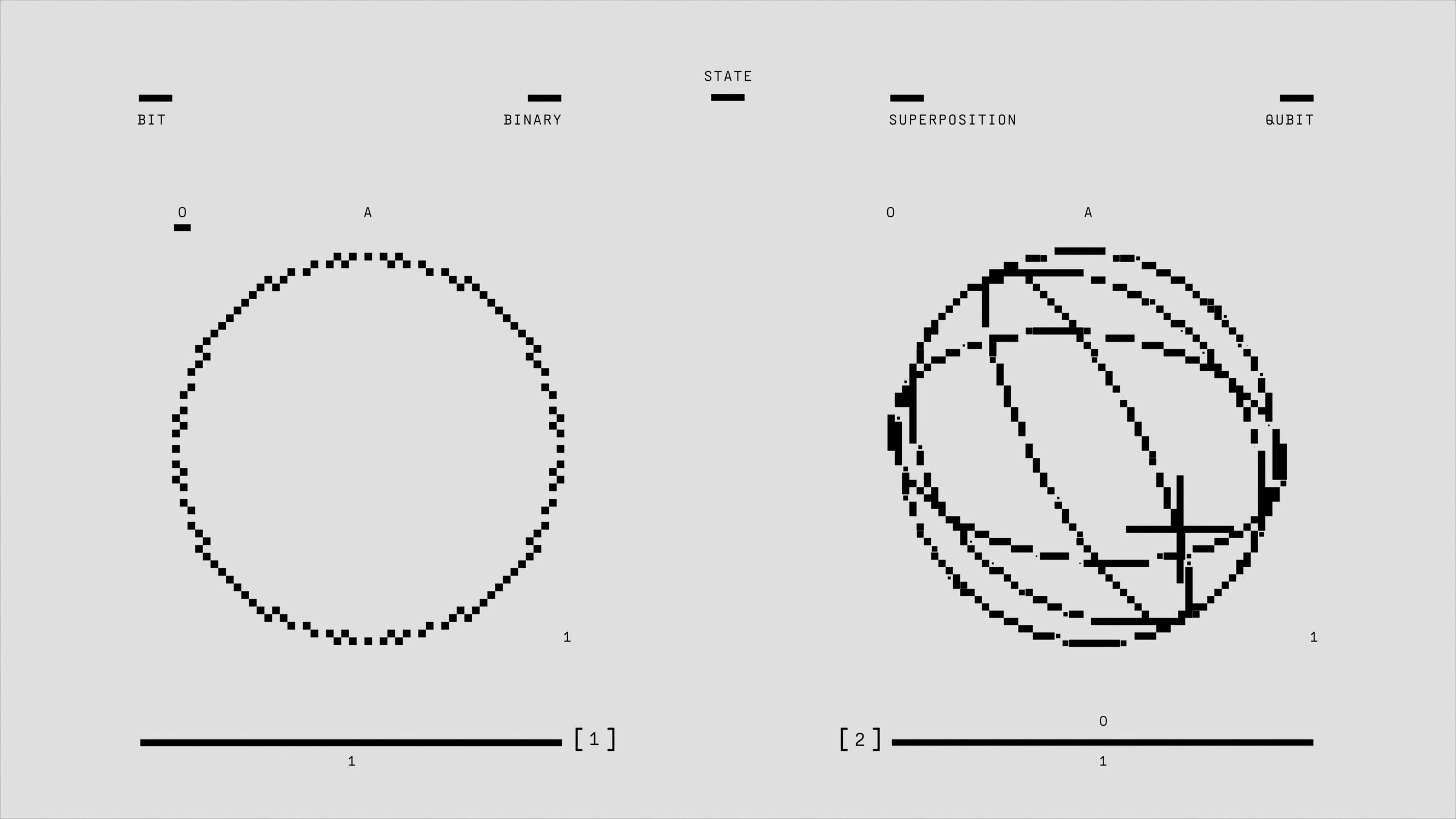
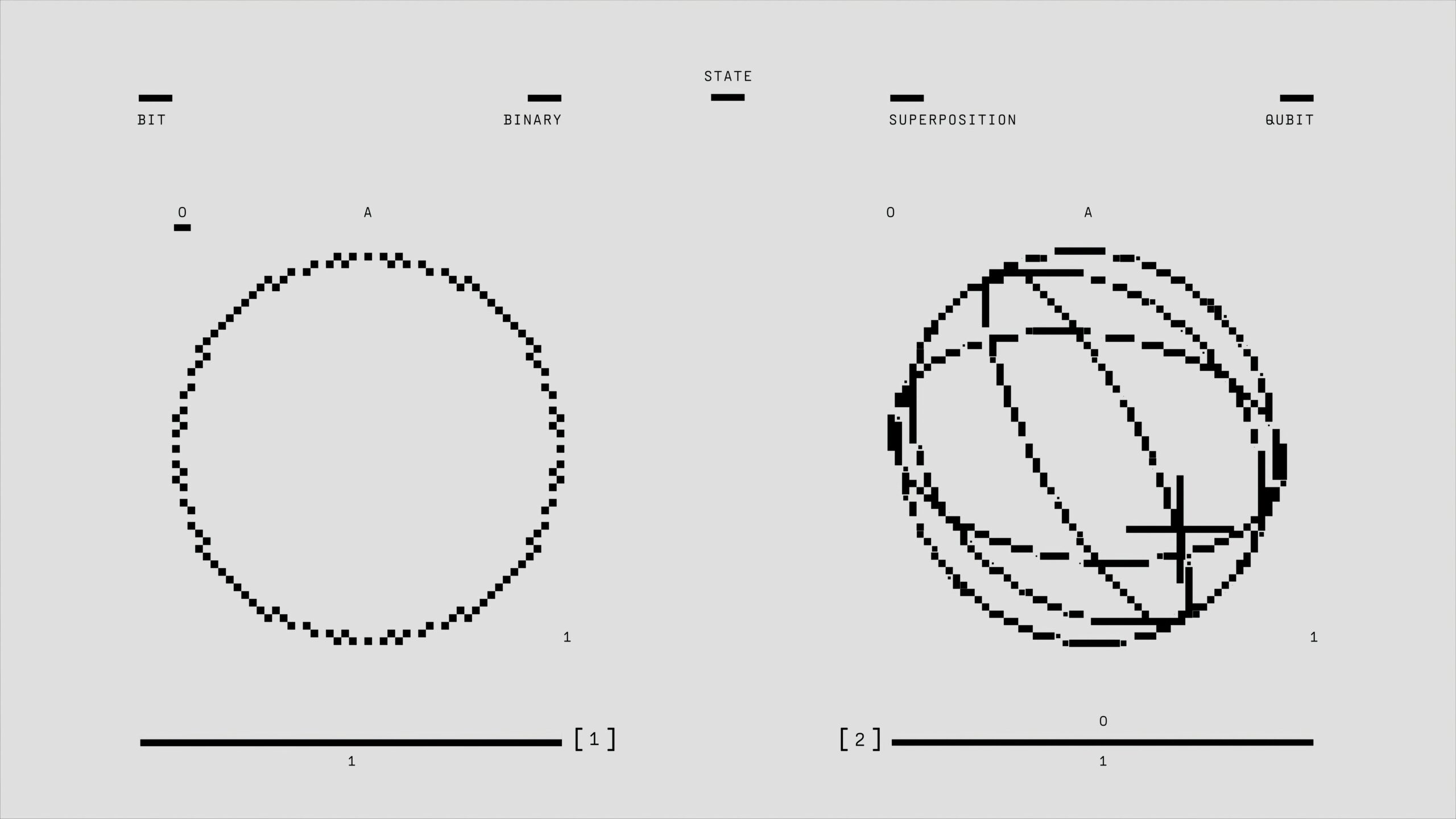
The intersection of quantum mechanics and machine learning has emerged as one of the most exciting frontiers in modern technology. While classical computers process information using bits that exist as either 0 or 1, quantum computers leverage qubits that can exist in multiple states simultaneously through a phenomenon called superposition. This fundamental difference creates unprecedented opportunities for machine learning algorithms to explore solution spaces exponentially faster than their classical counterparts.
The potential of quantum machine learning extends far beyond incremental improvements. We’re witnessing the birth of entirely new computational paradigms that could revolutionize industries ranging from drug discovery to financial modeling, climate prediction to materials science. Major technology companies including IBM, Google, Microsoft, and Amazon have invested billions in developing quantum computing infrastructure, recognizing that whoever masters this technology first will gain a substantial competitive advantage in the coming decades.
Understanding the Quantum Advantage in Machine Learning 💡
Quantum machine learning algorithms exploit quantum mechanical properties to achieve computational advantages that classical algorithms cannot match. Three key quantum phenomena drive these capabilities: superposition, entanglement, and interference. Superposition allows quantum systems to evaluate multiple possibilities simultaneously, while entanglement creates correlations between qubits that have no classical equivalent. Quantum interference amplifies correct solutions while canceling out incorrect ones, guiding algorithms toward optimal outcomes.
The theoretical speedup offered by quantum algorithms is staggering. For certain optimization problems, quantum computers could potentially solve in minutes what would take classical supercomputers thousands of years. This quantum supremacy isn’t universal across all problem types, but for specific classes of computations particularly relevant to machine learning, the advantages are transformative.
Key Quantum Algorithms Powering Machine Learning
Several quantum algorithms have emerged as particularly promising for machine learning applications. The Quantum Approximate Optimization Algorithm (QAOA) tackles combinatorial optimization problems common in logistics and scheduling. Variational Quantum Eigensolvers (VQE) excel at finding ground states of quantum systems, with applications in chemistry and materials science. The Quantum Support Vector Machine provides exponential speedup for classification tasks involving high-dimensional data.
The HHL algorithm, named after its creators Harrow, Hassidim, and Lloyd, solves linear systems of equations exponentially faster than classical methods under certain conditions. Since many machine learning techniques reduce to solving large linear systems, this algorithm potentially accelerates numerous AI applications from recommendation engines to neural network training.
🚀 Breakthrough Applications Transforming Industries
Drug Discovery and Molecular Simulation
Pharmaceutical research stands to benefit enormously from quantum machine learning. Simulating molecular interactions requires calculating quantum mechanical properties of complex systems, a task perfectly suited for quantum computers. Traditional drug discovery involves screening millions of molecular candidates, a process that takes years and costs billions. Quantum machine learning can model protein folding, predict drug-target interactions, and identify promising compounds with unprecedented accuracy and speed.
Several biotech companies have already begun collaborating with quantum computing firms. These partnerships have produced promising results in modeling challenging molecules that classical computers struggle to simulate accurately. The potential to reduce drug development timelines from over a decade to just a few years could accelerate treatments for diseases like Alzheimer’s, cancer, and rare genetic disorders.
Financial Modeling and Risk Analysis
The finance industry generates enormous amounts of data requiring sophisticated analysis to identify patterns, assess risks, and optimize portfolios. Quantum machine learning algorithms can process these vast datasets to detect subtle correlations invisible to classical approaches. Applications include real-time fraud detection, algorithmic trading optimization, credit risk assessment, and market crash prediction.
Monte Carlo simulations, widely used in financial modeling to assess risk, benefit particularly from quantum speedup. These simulations typically require millions of iterations to achieve acceptable accuracy. Quantum algorithms can potentially achieve the same accuracy with exponentially fewer iterations, enabling more comprehensive risk analysis in time-sensitive scenarios.
Climate Modeling and Environmental Protection 🌍
Understanding and predicting climate change requires processing enormous datasets and simulating complex atmospheric dynamics. Quantum machine learning offers tools to create more accurate climate models by analyzing interactions between countless variables simultaneously. These improved models could provide better predictions for extreme weather events, helping communities prepare and potentially saving thousands of lives.
Quantum algorithms also show promise for optimizing renewable energy systems. They can determine optimal placement for wind turbines or solar panels by analyzing meteorological data, geographical constraints, and energy distribution networks simultaneously. This optimization could significantly improve clean energy efficiency and accelerate the transition away from fossil fuels.
Cutting-Edge Innovations Shaping Tomorrow
Quantum Neural Networks
Researchers have developed quantum versions of neural networks that leverage quantum properties to potentially overcome limitations of classical deep learning. These Quantum Neural Networks (QNNs) use parameterized quantum circuits as the basic computational unit, analogous to neurons in classical networks. Early experiments suggest QNNs might require fewer training examples to achieve comparable accuracy, addressing one of deep learning’s major challenges: data hunger.
Quantum convolutional neural networks extend this concept to image processing tasks. By encoding image data into quantum states, these networks can potentially recognize patterns using exponentially fewer parameters than classical CNNs. While still in early experimental stages, these architectures demonstrate the creative approaches researchers are pursuing to harness quantum advantages.
Quantum Generative Models
Generative models that create realistic synthetic data have numerous applications, from augmenting limited training datasets to generating molecular structures for drug discovery. Quantum generative adversarial networks (QGANs) leverage quantum circuits to learn probability distributions and generate samples more efficiently than classical GANs in certain scenarios.
Quantum Boltzmann machines represent another promising generative approach. These models can potentially capture complex probability distributions that classical machines struggle with, opening possibilities for more sophisticated data generation and unsupervised learning applications.
⚡ Overcoming Technical Challenges
Quantum Decoherence and Error Rates
Despite tremendous potential, quantum machine learning faces significant technical hurdles. Quantum decoherence, where quantum states lose their properties due to environmental interference, remains a major challenge. Current quantum computers can maintain quantum states for only microseconds to milliseconds before decoherence destroys the computation. Researchers are developing sophisticated error correction codes and improved qubit designs to extend coherence times.
Error rates in quantum operations also exceed those acceptable for many practical applications. While classical computers achieve error rates below one in a billion, quantum gates currently produce errors in roughly one of every hundred to thousand operations. Quantum error correction schemes can address this issue but require substantial overhead, with estimates suggesting hundreds or thousands of physical qubits needed to create a single reliable logical qubit.
Scaling Quantum Systems
Most current quantum computers contain fewer than one hundred qubits, insufficient for many commercially valuable applications. Scaling to thousands or millions of qubits presents enormous engineering challenges. Qubits must be isolated from environmental noise while remaining controllable and interconnected. Different quantum computing platforms, including superconducting circuits, trapped ions, topological qubits, and photonic systems, each offer unique advantages and face distinct scaling obstacles.
Hybrid Classical-Quantum Approaches 🔄
Recognizing that large-scale fault-tolerant quantum computers remain years away, researchers have developed hybrid algorithms that combine classical and quantum computing. These Variational Quantum Algorithms (VQAs) use quantum processors for specific subroutines where quantum advantage exists while relying on classical computers for optimization and control.
The Quantum Approximate Optimization Algorithm exemplifies this hybrid approach. A quantum processor evaluates candidate solutions, while a classical optimizer adjusts parameters to improve performance. This division of labor allows meaningful quantum applications on current noisy intermediate-scale quantum (NISQ) devices despite their limitations.
Hybrid approaches also facilitate gradual adoption. Organizations can begin experimenting with quantum algorithms without completely replacing existing infrastructure, learning which problems benefit most from quantum acceleration while classical systems handle the remainder.
🎯 Preparing for the Quantum Future
Developing Quantum Literacy
As quantum machine learning transitions from research laboratories to practical applications, developing quantum literacy becomes increasingly important. Educational institutions have begun offering quantum computing courses, and online platforms provide accessible introductions to quantum principles. Organizations should invest in training programs to prepare their workforce for quantum technologies.
Quantum programming frameworks like Qiskit, Cirq, and PennyLane lower barriers to entry by providing high-level abstractions that hide some quantum mechanical complexity. These tools enable machine learning practitioners to experiment with quantum algorithms without requiring physics PhDs, democratizing access to quantum capabilities.
Establishing Quantum-Ready Infrastructure
Forward-thinking organizations are laying groundwork for quantum integration even before large-scale quantum computers arrive. This preparation includes identifying problems where quantum speedup would provide substantial value, developing classical benchmarks for comparison, and establishing partnerships with quantum computing providers offering cloud access to quantum hardware.
Cloud-based quantum computing services from IBM, Amazon, Microsoft, and Google allow experimentation without massive capital investment. Organizations can test algorithms on real quantum hardware, understand current limitations, and position themselves to capitalize quickly as technology matures.
Ethical Considerations and Security Implications 🔐
Quantum computing’s power raises important ethical questions. Quantum algorithms could break widely used encryption methods, threatening digital security infrastructure. Organizations must begin transitioning to quantum-resistant cryptography well before large-scale quantum computers become available. The National Institute of Standards and Technology has initiated standardization efforts for post-quantum cryptographic algorithms.
Quantum machine learning’s ability to process sensitive data more efficiently also raises privacy concerns. Enhanced pattern recognition could enable unprecedented surveillance capabilities if misused. Establishing ethical frameworks and regulatory guidelines before these technologies mature helps ensure responsible development and deployment.
The Path Forward: What Comes Next 🌟
The quantum machine learning field stands at an inflection point. While fully fault-tolerant quantum computers capable of solving commercially valuable problems remain years away, steady progress continues across multiple fronts. Qubit quality improves annually, quantum algorithms become more sophisticated, and our understanding of where quantum advantages exist deepens.
Near-term applications will likely focus on optimization problems in logistics, finance, and chemistry where even modest quantum speedup provides substantial value. As hardware improves, more ambitious applications in drug discovery, artificial intelligence, and materials science will become feasible.
The timeline to quantum advantage varies by application. Some optimization problems might see practical quantum solutions within five years, while applications requiring millions of error-corrected qubits may require fifteen years or more. Regardless of exact timelines, the trajectory is clear: quantum machine learning will fundamentally transform how we process information and solve complex problems.

Embracing the Quantum Paradigm Shift
Quantum machine learning represents more than incremental technological progress; it embodies a paradigm shift in computation itself. Organizations that understand this transformation and position themselves accordingly will gain competitive advantages as quantum capabilities mature. This preparation involves more than acquiring hardware—it requires cultivating quantum expertise, identifying high-value applications, and integrating quantum thinking into strategic planning.
The fusion of quantum computing and machine learning creates possibilities that seemed like science fiction just decades ago. From designing life-saving medications to understanding climate change, from optimizing global supply chains to creating more intelligent AI systems, quantum machine learning promises to tackle humanity’s most pressing challenges. While significant technical hurdles remain, the potential rewards justify the substantial investments being made worldwide.
As we stand on the threshold of the quantum era, one thing is certain: the organizations, researchers, and nations that embrace quantum machine learning today will shape the technological landscape of tomorrow. The quantum revolution is not a distant future—it is unfolding now, and the time to engage with these transformative technologies is today.