Quantum computing stands at the frontier of technological evolution, promising to reshape industries, accelerate scientific discovery, and solve problems once deemed impossible through classical computation methods.

🔬 The Quantum Revolution: Beyond Classical Computing Limits
The computational landscape is undergoing a fundamental transformation. While classical computers have served humanity remarkably well for decades, we’re now confronting challenges that exceed their capabilities. From simulating molecular interactions for drug discovery to optimizing global supply chains, certain problems require exponentially more processing power than traditional binary systems can provide.
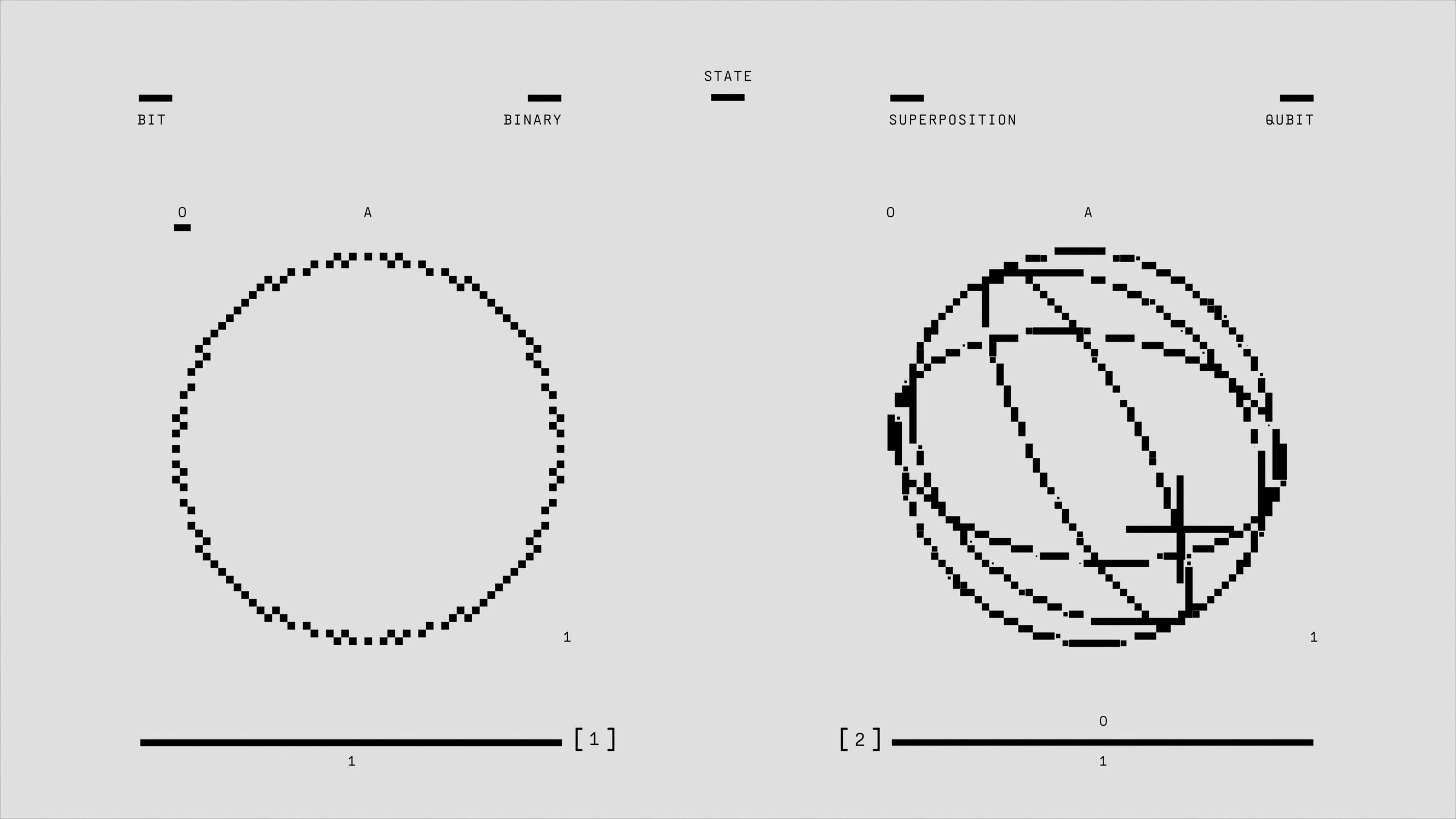
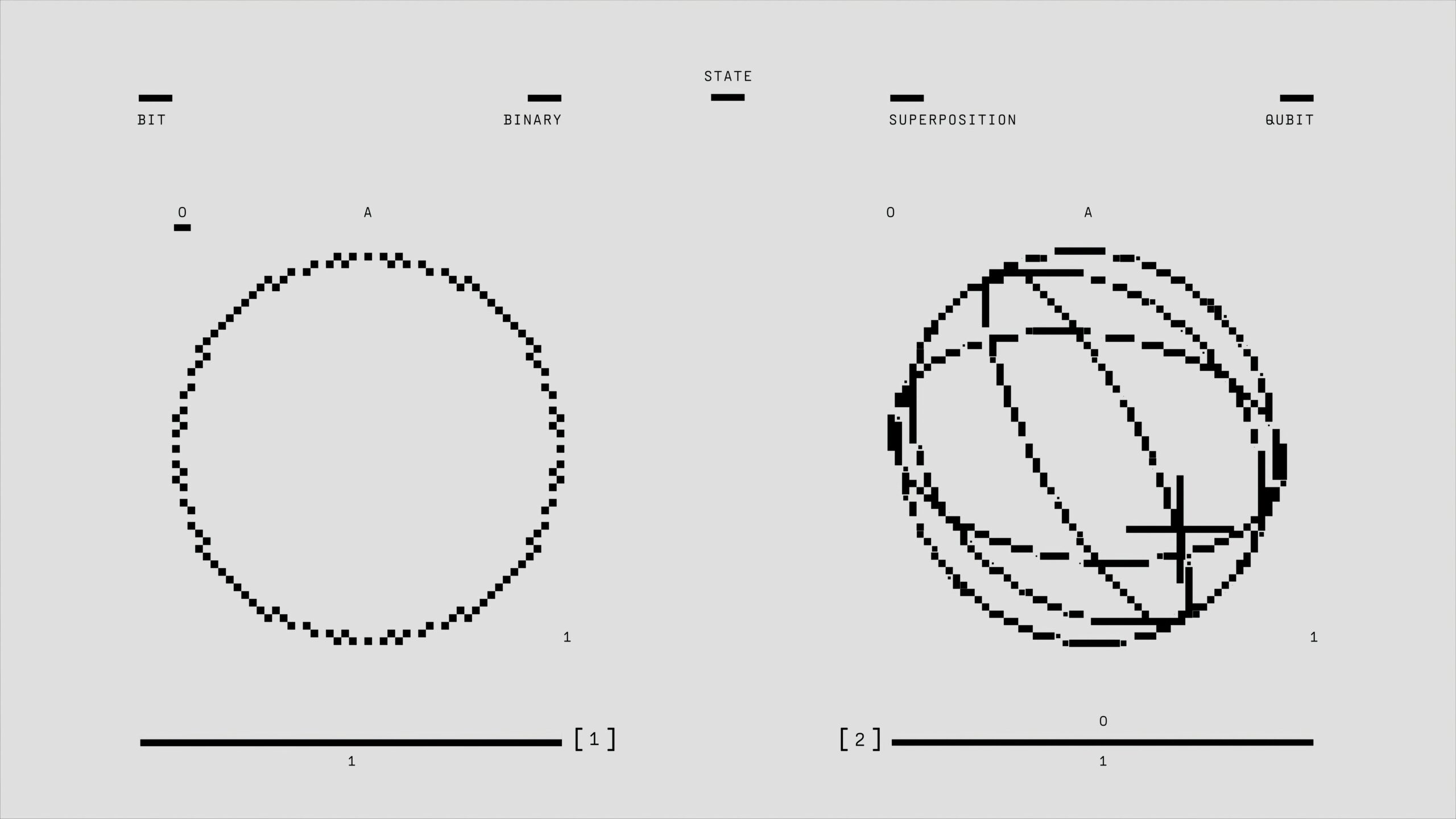
Quantum computing emerges as the answer to this computational bottleneck. Unlike classical bits that exist definitively as either 0 or 1, quantum bits—or qubits—leverage the peculiar properties of quantum mechanics to exist in multiple states simultaneously. This fundamental difference unlocks computational possibilities that seemed like science fiction just years ago.
The implications extend far beyond raw processing speed. Quantum computers approach problem-solving from an entirely different paradigm, exploring vast solution spaces simultaneously rather than sequentially. This parallel processing capability represents a qualitative leap forward, not merely an incremental improvement.
Understanding Quantum Bits: The Foundation of Quantum Power
At the heart of quantum computing lies the qubit, a quantum mechanical system that can represent information in ways impossible for classical bits. While a traditional bit holds a single binary value at any given moment, a qubit exists in what physicists call a “superposition state”—simultaneously representing both 0 and 1 until measured.
Physical implementations of qubits vary considerably across different quantum computing platforms. Some systems use superconducting circuits cooled to near absolute zero, where electrical currents flow in both directions simultaneously. Others employ trapped ions, suspended in electromagnetic fields and manipulated with laser pulses. Photonic systems use light particles, while topological qubits explore exotic states of matter.
Each qubit implementation presents unique advantages and challenges. Superconducting qubits, championed by companies like IBM and Google, offer relatively fast operation times but require extreme cooling. Trapped ion systems provide exceptional coherence times—the duration qubits maintain their quantum properties—but scale more slowly. The race continues to identify which approach will dominate future quantum architectures.
The Mathematics Behind Quantum States
The mathematical framework describing qubits draws from quantum mechanics, representing quantum states as vectors in complex vector spaces. A qubit’s state can be expressed as a linear combination of basis states, with probability amplitudes determining measurement outcomes. When multiple qubits interact, they create entangled states where measuring one qubit instantly affects others, regardless of physical separation.
This entanglement property, which Einstein famously called “spooky action at a distance,” provides quantum computers with their extraordinary parallel processing capabilities. A system of just 300 entangled qubits could theoretically represent more states than there are atoms in the observable universe.
⚡ Superposition: Computing Across Multiple Realities Simultaneously
Superposition represents one of quantum mechanics’ most counterintuitive yet powerful phenomena. In classical computing, processing follows deterministic pathways—calculations proceed step-by-step through defined logical gates. Quantum superposition enables qubits to explore numerous computational pathways simultaneously, collapsing to the most probable solution upon measurement.
Imagine searching through an enormous library for a specific book. A classical computer would check each shelf systematically, one location at a time. A quantum computer in superposition examines all shelves simultaneously, dramatically reducing search time. This parallelism grows exponentially with each additional qubit added to the system.
Maintaining superposition presents significant engineering challenges. Qubits remain extremely sensitive to environmental interference—a phenomenon called decoherence. Even minute temperature fluctuations, electromagnetic radiation, or molecular vibrations can collapse quantum states prematurely, introducing errors into calculations. Quantum error correction techniques work to preserve superposition long enough to complete useful computations.
Quantum Gates and Circuit Design
Quantum algorithms utilize specialized quantum gates that manipulate qubit states while preserving superposition. Unlike classical logic gates, quantum gates are reversible and operate on probability amplitudes rather than definite values. Common quantum gates include Hadamard gates that create superposition, CNOT gates that generate entanglement, and phase gates that adjust probability amplitudes.
Designing quantum circuits requires fundamentally different thinking than classical programming. Quantum algorithms must account for probabilistic outcomes, interference patterns, and decoherence timelines. The most elegant quantum algorithms achieve exponential speedups by cleverly orchestrating interference patterns so incorrect answers cancel out while correct solutions amplify.
🚀 Revolutionary Applications Transforming Industries
Quantum computing’s practical applications span virtually every sector of modern economy and scientific research. While fully fault-tolerant quantum computers remain under development, intermediate-scale quantum devices already demonstrate advantages in specific domains.
Drug Discovery and Molecular Simulation
Pharmaceutical development traditionally requires years of trial-and-error experimentation to identify promising drug candidates. Quantum computers excel at simulating molecular interactions at the quantum level—precisely where classical computers struggle. By accurately modeling how drug molecules bind to protein targets, quantum simulations could accelerate drug discovery timelines from decades to years.
Companies like IBM, Google, and specialized startups are partnering with pharmaceutical giants to explore quantum-enhanced drug design. Early projects focus on simulating small molecules to validate quantum advantage before scaling to larger, therapeutically relevant compounds. The potential impact on treating diseases from cancer to Alzheimer’s cannot be overstated.
Cryptography and Cybersecurity
Quantum computing presents both threats and opportunities for information security. Current encryption standards rely on the computational difficulty of factoring large numbers—a task that would take classical computers millennia. Shor’s algorithm, running on a sufficiently powerful quantum computer, could break these encryptions in hours.
This quantum threat has spurred development of post-quantum cryptography—encryption methods resistant to quantum attacks. Simultaneously, quantum key distribution leverages quantum mechanics to create theoretically unbreakable communication channels. Any attempt to intercept quantum-encrypted messages necessarily disturbs the quantum states, alerting legitimate users to eavesdropping attempts.
Optimization and Machine Learning
Many real-world problems involve finding optimal solutions among countless possibilities. Financial portfolio optimization, traffic routing, manufacturing scheduling, and logistics planning all belong to this category. Quantum algorithms like QAOA (Quantum Approximate Optimization Algorithm) show promise for solving these combinatorial optimization problems more efficiently than classical approaches.
Machine learning represents another frontier for quantum enhancement. Quantum machine learning algorithms could process high-dimensional data more efficiently, identify subtle patterns in noisy datasets, and train complex models faster. While quantum advantage in machine learning remains contested, research progresses rapidly across multiple fronts.
Climate Modeling and Materials Science
Understanding climate change requires simulating Earth’s complex atmospheric, oceanic, and ecological systems with unprecedented detail. Quantum computers could enhance climate models by incorporating quantum effects in molecular interactions, improving prediction accuracy, and exploring intervention scenarios.
Materials science similarly benefits from quantum simulation capabilities. Designing superconductors that function at room temperature, creating more efficient solar cells, or developing better battery materials all require understanding quantum mechanical properties. Quantum computers provide the natural tools for these quantum simulations.
🔧 Current Quantum Computing Platforms and Ecosystem
The quantum computing landscape features diverse players pursuing different technological approaches and business models. Major technology companies, government research institutions, and specialized startups all contribute to rapid ecosystem development.
IBM offers cloud-based quantum computing access through IBM Quantum Experience, allowing researchers and developers to run quantum algorithms on real quantum hardware. Their roadmap targets thousands of qubits within this decade, progressing toward fault-tolerant quantum computing.
Google achieved “quantum supremacy” in 2019, demonstrating their Sycamore processor could solve a specific problem faster than the world’s most powerful classical supercomputer. While the practical utility of this particular calculation remains debated, the milestone validated quantum computing’s potential.
Amazon provides quantum computing access through Amazon Braket, a fully managed service connecting users to quantum hardware from multiple providers. This platform-agnostic approach allows developers to experiment with different quantum technologies without maintaining specialized infrastructure.
Startups like Rigetti Computing, IonQ, and D-Wave pursue specialized niches within quantum computing. D-Wave focuses on quantum annealing, a specialized approach optimized for certain optimization problems. IonQ develops trapped-ion systems emphasizing high-fidelity quantum operations. The diversity of approaches reflects quantum computing’s early development stage.
💡 Overcoming Technical Challenges on the Path Forward
Despite tremendous progress, significant obstacles separate current quantum computers from their full potential. Understanding these challenges provides realistic expectations about quantum computing timelines.
Quantum Error Correction
Qubits’ extreme environmental sensitivity means errors occur frequently during quantum computations. Error rates must decrease by several orders of magnitude before quantum computers can reliably solve practical problems. Quantum error correction encodes logical qubits across multiple physical qubits, detecting and correcting errors without collapsing quantum states.
However, current error correction schemes require enormous overhead—potentially thousands of physical qubits per logical qubit. Achieving fault-tolerant quantum computing demands both better physical qubits with lower error rates and more efficient error correction codes reducing overhead requirements.
Scalability and Connectivity
Building quantum computers with thousands or millions of qubits presents formidable engineering challenges. Physical qubits must maintain quantum coherence while remaining sufficiently isolated from their environment yet controllable through external signals. Connecting qubits so they can interact for multi-qubit operations without introducing excessive crosstalk requires careful architectural design.
Different qubit technologies face distinct scaling challenges. Superconducting systems struggle with wiring complexity as qubit counts increase. Trapped ion systems encounter difficulties maintaining control precision across large ion chains. Photonic approaches must solve efficient photon-photon interaction problems.
Algorithm Development and Software Tools
Quantum computing requires new programming paradigms. Classical algorithms cannot simply port to quantum systems—quantum advantage requires algorithms specifically designed around quantum mechanical properties. Developing these algorithms demands expertise spanning quantum physics, computer science, and specific application domains.
Software development tools are maturing rapidly. Frameworks like Qiskit (IBM), Cirq (Google), and PennyLane provide high-level abstractions for quantum circuit design. These tools lower entry barriers for developers, accelerating quantum algorithm research and application development.
🌍 Quantum Computing’s Societal and Economic Impact
Quantum computing’s eventual maturation will ripple throughout society in profound ways. Economic advantages will likely accrue first to organizations capable of investing in quantum expertise and infrastructure, potentially widening technological gaps between leading and developing economies.
Workforce development represents a critical challenge. Quantum computing requires specialized knowledge blending physics, mathematics, computer science, and engineering. Educational institutions worldwide are establishing quantum computing curricula, but workforce supply significantly lags projected demand.
Ethical considerations accompany any powerful technology. Quantum computing’s cryptographic implications raise national security concerns. Its potential for unprecedented surveillance capabilities demands careful governance. Ensuring quantum technology benefits humanity broadly rather than concentrating power among a few entities requires proactive policy frameworks.
🎯 The Quantum Future: Realistic Expectations and Transformative Possibilities
Predicting quantum computing’s timeline remains challenging. Optimistic projections suggest fault-tolerant quantum computers solving practical problems within a decade. Conservative estimates extend this timeline significantly. The path forward likely involves gradual progress punctuated by breakthrough moments as technical obstacles yield to innovative solutions.
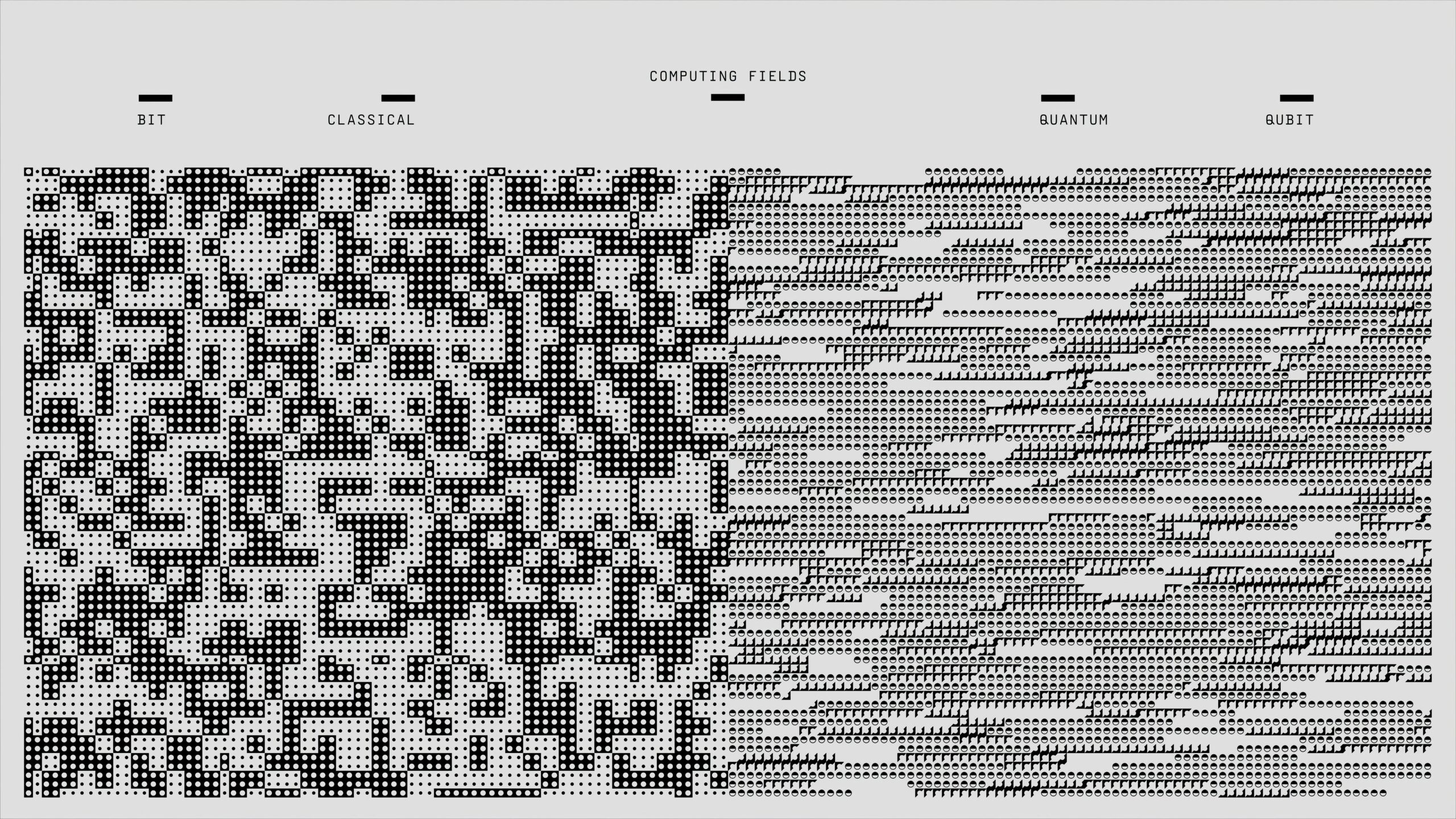
Near-term quantum computers, operating in the NISQ (Noisy Intermediate-Scale Quantum) era, may find value in specialized applications before achieving universal quantum advantage. Hybrid approaches combining classical and quantum processing could deliver practical benefits sooner than pure quantum solutions.
The quantum computing revolution will unfold gradually, not overnight. Early applications will target problems where quantum advantage is clearest—quantum simulation, certain optimization tasks, and cryptography. As technology matures, quantum computing will integrate into computational infrastructure alongside classical computers, each handling tasks suited to their strengths.
Investment in quantum computing continues accelerating globally. Governments recognize quantum technology as strategically crucial, funding ambitious research initiatives. Private investment flows toward quantum startups and established companies’ quantum divisions. This capital influx fuels rapid advancement across hardware, software, and applications.
Quantum computing represents humanity’s boldest attempt yet to harness nature’s fundamental laws for computational purposes. The journey from theoretical quantum mechanics to practical quantum devices spans nearly a century. We now stand at the threshold of this technology’s practical realization, with the potential to unlock solutions to our most pressing challenges—from climate change to disease treatment to scientific mysteries that classical computers cannot resolve.
The quantum future beckons with possibilities that stretch imagination’s limits. While significant obstacles remain, the trajectory is clear: quantum computing will transform how we process information, solve problems, and understand our universe. Organizations, researchers, and individuals positioning themselves at quantum computing’s forefront today will shape tomorrow’s technological landscape in ways we’re only beginning to comprehend.