Quantum computing represents a revolutionary shift in how we process information, promising to solve problems beyond the reach of classical computers. This guide explores the fundamental principles shaping this transformative technology. 🚀

The Quantum Leap: Why Traditional Computing Has Met Its Match
For decades, classical computers have doubled their processing power following Moore’s Law, but we’re approaching physical limits. Transistors can only shrink so far before quantum effects interfere with their operation. Ironically, the same quantum phenomena that threaten classical computing provide the foundation for an entirely new computational paradigm.
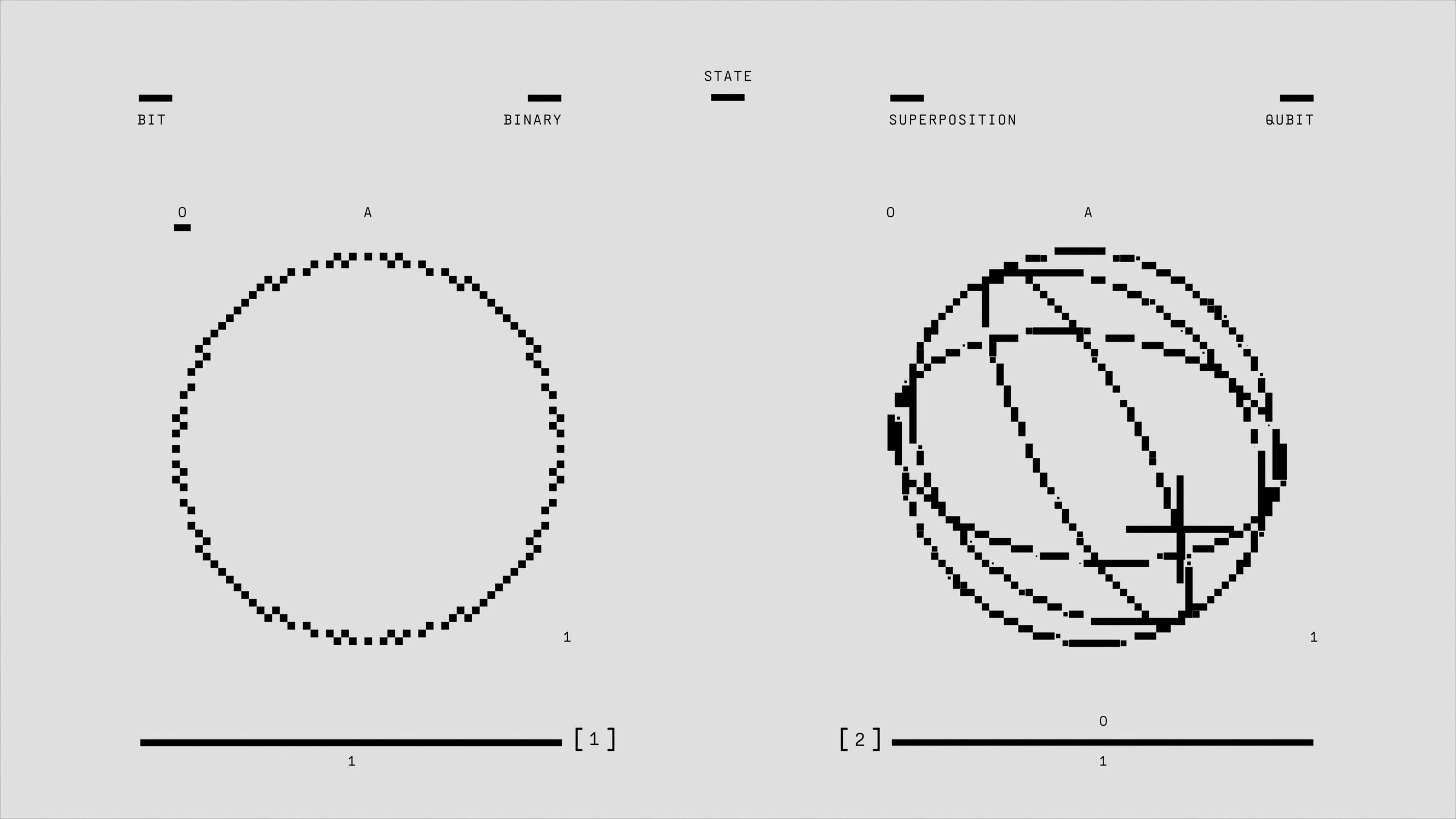
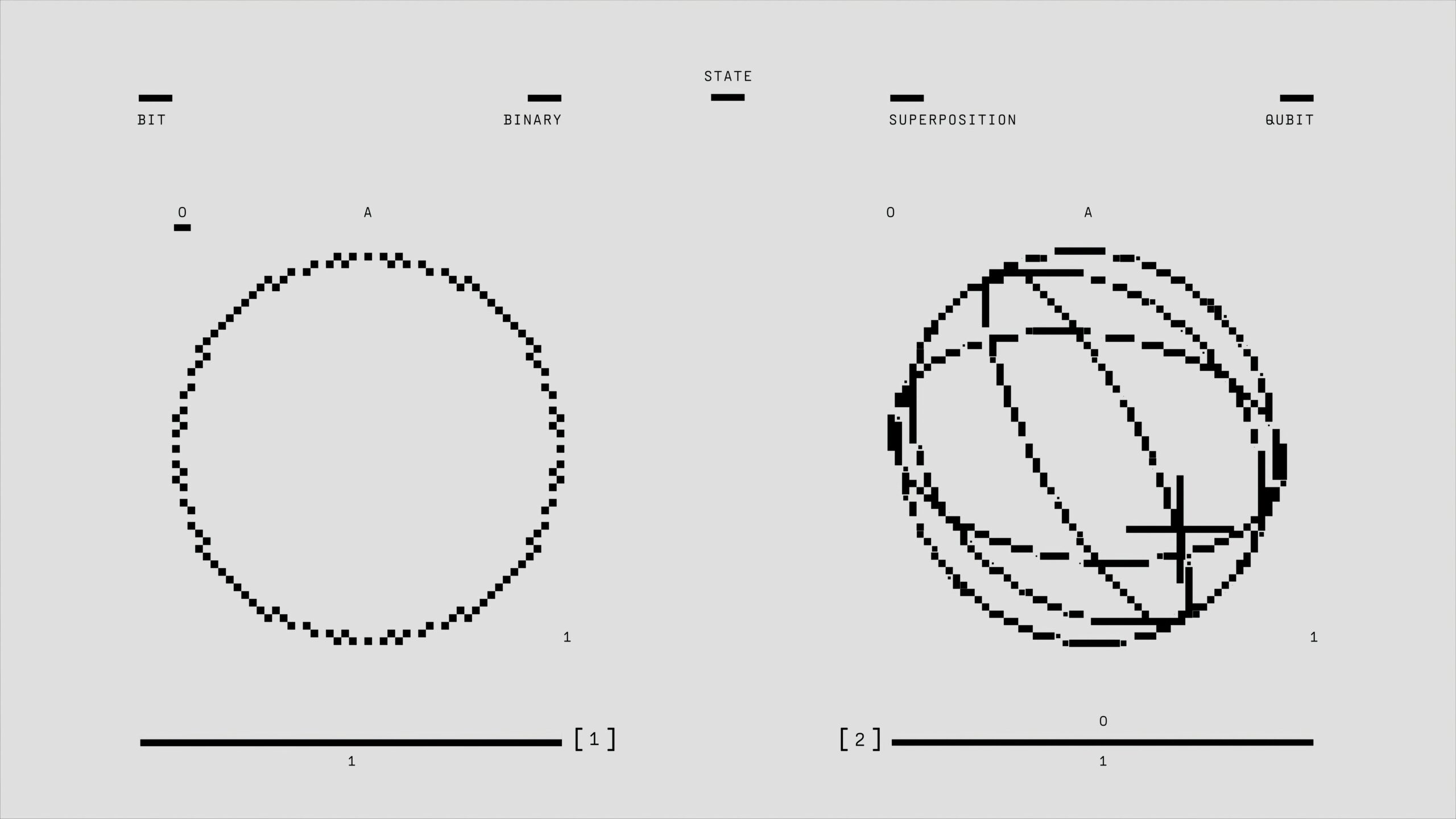
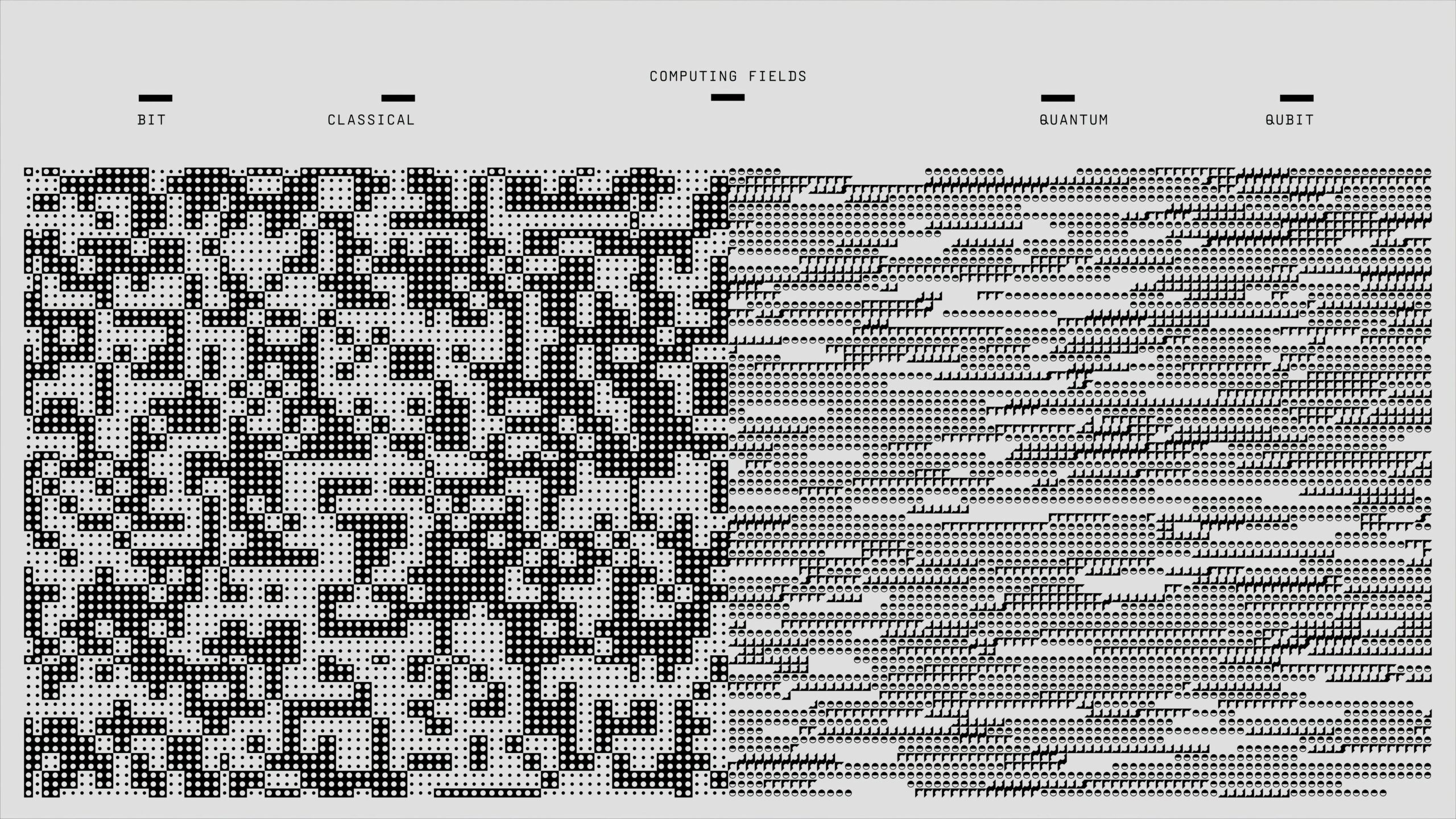
Traditional computers process information using bits—binary units that exist as either 0 or 1. Every calculation, from simple arithmetic to complex simulations, breaks down into sequences of these binary operations. While this approach has powered the digital revolution, certain problems remain computationally intractable, requiring processing time that exceeds the age of the universe.
Quantum computers leverage the strange properties of quantum mechanics to process information in fundamentally different ways. They promise exponential speedups for specific problem classes, potentially revolutionizing fields from cryptography to drug discovery. Understanding these foundations isn’t just academic curiosity—it’s becoming essential knowledge for anyone involved in technology, science, or business strategy.
Quantum Bits: The Building Blocks of Quantum Information
At the heart of quantum computing lies the quantum bit, or qubit. Unlike classical bits, qubits exploit a quantum property called superposition, allowing them to exist in multiple states simultaneously. A qubit can be 0, 1, or both at once—a concept that defies everyday intuition but follows rigorously from quantum mechanics.
Think of superposition like a coin spinning in the air. While airborne, it’s neither definitively heads nor tails but exists in both states. Only when it lands—when we measure the qubit—does it collapse into a definite value. This property allows quantum computers to explore multiple solution paths simultaneously, providing their computational advantage.
Several physical systems can serve as qubits:
- Superconducting circuits: Tiny loops of superconducting material cooled to near absolute zero, used by companies like IBM and Google
- Trapped ions: Individual atoms held in place by electromagnetic fields and manipulated with lasers
- Topological qubits: Exotic quantum states that encode information in global properties, potentially more stable
- Photonic qubits: Information encoded in light particles, promising room-temperature operation
- Silicon spin qubits: Electron spins in silicon, potentially leveraging existing semiconductor manufacturing
Each approach has distinct advantages and challenges regarding coherence time, scalability, and error rates. The race to build practical quantum computers continues across multiple technological platforms.
Entanglement: The Spooky Connection That Powers Quantum Computing ⚛️
Einstein famously called quantum entanglement “spooky action at a distance,” and for good reason. When qubits become entangled, they form correlations that cannot exist between classical objects. Measuring one entangled qubit instantly affects its partners, regardless of the distance separating them.
Entanglement isn’t just theoretically fascinating—it’s computationally essential. It allows quantum computers to process information in ways impossible for classical systems. Multiple qubits working together through entanglement can represent and manipulate exponentially more information than the same number of classical bits.
Consider this comparison: three classical bits can represent exactly one of eight possible values (000 through 111) at any given time. Three entangled qubits, however, can simultaneously represent all eight values through superposition. This parallel processing capability grows exponentially—fifty qubits can represent more states than there are atoms in the solar system.
This exponential scaling explains both quantum computing’s promise and its challenge. While it offers tremendous computational power, maintaining entanglement requires extreme isolation from the environment. Even tiny disturbances can break entanglement, causing errors that compromise calculations.
Quantum Gates: Orchestrating Quantum Operations
Classical computers perform calculations using logic gates—AND, OR, NOT, and others—that manipulate bits according to Boolean logic. Quantum computers similarly use quantum gates, but these operations leverage superposition and entanglement to perform more complex transformations.
Quantum gates apply mathematical operations called unitary transformations. Unlike classical gates, quantum gates are reversible—you can always undo a quantum operation. This reversibility follows from the fundamental laws of quantum mechanics and has important implications for quantum algorithm design.
Common quantum gates include:
- Hadamard gate: Creates superposition by transforming a definite state into an equal combination of 0 and 1
- Pauli gates (X, Y, Z): Perform rotations around different axes of the qubit’s state space
- CNOT gate: A two-qubit gate that creates entanglement and performs conditional operations
- Phase gates: Modify the relative phase between quantum states without changing probabilities
- Toffoli gate: A three-qubit gate that enables universal quantum computation
By combining these basic gates, quantum programmers construct quantum circuits—sequences of operations that implement specific algorithms. This gate-based model parallels classical computing but exploits uniquely quantum resources to achieve computational advantages.
Decoherence: The Enemy of Quantum Information 🌊
The same quantum properties that make quantum computing powerful also make it extraordinarily fragile. Quantum states interact constantly with their environment—stray electromagnetic fields, thermal vibrations, cosmic rays—causing decoherence, the loss of quantum information.
Decoherence represents the primary engineering challenge in building practical quantum computers. Current qubits maintain their quantum properties for microseconds to milliseconds before environmental noise destroys the information. Complex calculations requiring millions of operations must complete within these tiny windows.
Researchers combat decoherence through multiple approaches. Extreme cooling reduces thermal noise—many quantum computers operate at temperatures colder than outer space. Electromagnetic shielding blocks external interference. Error correction codes, though computationally expensive, can detect and fix errors before they corrupt calculations.
The quest for longer coherence times drives quantum hardware development. Improvements come incrementally through better materials, refined control systems, and innovative qubit designs. Each advance brings practical quantum computing closer to reality.
Quantum Algorithms: Where Theory Meets Application
Quantum computers aren’t faster at everything—only at specific problem types where quantum algorithms provide advantages. Understanding which problems benefit from quantum approaches remains an active research area, but several algorithms have demonstrated clear quantum speedups.
Shor’s algorithm factors large numbers exponentially faster than known classical algorithms. This breakthrough has profound implications for cryptography, as current encryption methods rely on factoring’s computational difficulty. A large-scale quantum computer running Shor’s algorithm could break widely-used encryption schemes.
Grover’s algorithm searches unsorted databases quadratically faster than classical methods. While less dramatic than Shor’s exponential speedup, Grover’s algorithm applies broadly to optimization and search problems across numerous domains.
Quantum simulation algorithms model quantum systems directly, potentially revolutionizing chemistry and materials science. Classical computers struggle to simulate quantum behavior because the problem complexity grows exponentially with system size. Quantum computers naturally represent quantum states, making certain simulations exponentially more efficient.
Variational quantum algorithms combine quantum and classical processing, showing promise for near-term quantum devices. These hybrid approaches work within current hardware limitations while still providing computational advantages for optimization and machine learning tasks.
Quantum Error Correction: Building Reliable Systems from Unreliable Parts 🛠️
Classical computers achieve reliability through redundancy and error correction codes. Similar principles apply to quantum computing, but quantum error correction faces unique challenges. You cannot simply copy quantum information—the no-cloning theorem forbids it. You cannot measure qubits without destroying superposition. Yet somehow, you must detect and correct errors.
Quantum error correction codes solve this paradox through clever encoding schemes. Logical qubits spread information across multiple physical qubits, creating redundancy without cloning. Syndrome measurements detect errors without revealing the protected information. Quantum gates on logical qubits translate into operations on constituent physical qubits.
The catch? Current error correction schemes require substantial overhead. Protecting one logical qubit might require dozens or hundreds of physical qubits, depending on the code and physical error rates. This multiplicative cost means that practical, error-corrected quantum computers need vastly more qubits than the logical count suggests.
Reaching the threshold for fault-tolerant quantum computing—where error correction succeeds faster than new errors accumulate—represents a critical milestone. Recent experimental demonstrations show progress toward this goal, but significant engineering challenges remain before error correction enables large-scale quantum computation.
The Quantum Computing Ecosystem: Hardware, Software, and Cloud Access
Building quantum computers requires expertise spanning physics, engineering, materials science, and computer science. Major technology companies, specialized startups, and research institutions worldwide are investing billions in quantum computing development. This ecosystem is rapidly maturing, with increasingly sophisticated hardware and software tools.
Cloud-based quantum computing platforms have democratized access to real quantum hardware. IBM Quantum Experience, Amazon Braket, Microsoft Azure Quantum, and others allow researchers and developers to run quantum circuits on actual quantum processors via the internet. This accessibility accelerates research and education, letting people learn quantum programming without building their own quantum computers.
Quantum software development kits (SDKs) provide high-level programming interfaces for quantum algorithms. Qiskit, Cirq, Q#, and other frameworks abstract hardware details, letting programmers focus on algorithm design. These tools include simulators for testing code classically before running on quantum hardware, documentation, tutorials, and growing communities supporting quantum software development.
Practical Applications: Where Quantum Computing Makes a Difference
While universal quantum computers remain under development, specific applications are emerging where quantum approaches provide clear advantages. Understanding these use cases helps guide quantum computing investment and research priorities.
Drug discovery and molecular modeling: Quantum computers can simulate molecular interactions with unprecedented accuracy, potentially accelerating pharmaceutical development and materials design. Classical computers struggle with electron correlation effects that quantum computers naturally represent.
Optimization problems: Logistics, scheduling, portfolio optimization, and numerous other fields involve finding optimal solutions from vast possibility spaces. Quantum approaches like quantum annealing and variational algorithms show promise for these combinatorial problems.
Machine learning: Quantum machine learning algorithms might process certain datasets more efficiently than classical methods. While research continues, quantum approaches could enhance pattern recognition, classification, and data analysis tasks.
Cryptography: Beyond breaking existing encryption, quantum computing enables quantum cryptography—communication protocols with security guaranteed by physics rather than computational assumptions. Quantum key distribution already sees commercial deployment.
Financial modeling: Risk analysis, derivative pricing, and market simulation involve complex calculations where quantum algorithms might provide advantages. Financial institutions actively explore quantum computing applications.
Learning Quantum Computing: Resources and Pathways 📚
The quantum computing field needs diverse talent—physicists, engineers, mathematicians, and computer scientists all contribute. Getting started requires foundational knowledge in quantum mechanics, linear algebra, and programming, but numerous resources support learning at various levels.
Online courses from universities and companies provide structured introductions. MIT OpenCourseWare, Coursera, edX, and specialized platforms offer quantum computing courses ranging from conceptual overviews to advanced technical training. Many are free or low-cost, making quality education accessible.
Textbooks like “Quantum Computation and Quantum Information” by Nielsen and Chuang provide comprehensive technical foundations. More accessible introductions include “Quantum Computing: An Applied Approach” and “Dancing with Qubits,” catering to different backgrounds and interests.
Hands-on experience with quantum programming platforms accelerates learning. Working through tutorials, implementing basic algorithms, and running code on simulators or real quantum hardware builds intuition that theory alone cannot provide. Community forums and developer networks offer support for learners.
The Road Ahead: Quantum Advantage and Beyond 🔮
Quantum computing stands at an inflection point. Recent demonstrations of quantum advantage—quantum computers outperforming classical ones at specific tasks—mark significant milestones, though practical applications remain limited. The next decade will likely see quantum computers transition from research tools to practical problem-solving platforms.
Near-term quantum computers, sometimes called NISQ (Noisy Intermediate-Scale Quantum) devices, work despite imperfect error correction. Researchers design algorithms specifically for these systems, accepting limitations while extracting useful results. This pragmatic approach allows progress while perfect, error-corrected systems remain under development.
The path to large-scale, fault-tolerant quantum computers requires sustained effort across multiple fronts: improving qubit quality, scaling to thousands or millions of qubits, perfecting error correction, developing better algorithms, and training the quantum workforce. Progress continues steadily, with each advance building toward practical quantum computing.
Quantum computing won’t replace classical computers but will complement them, handling specialized problems where quantum approaches excel. Hybrid classical-quantum systems will likely dominate, leveraging each technology’s strengths. Understanding when and how to apply quantum computing becomes increasingly important as the technology matures.
Preparing for the Quantum Future: Strategic Considerations
Organizations across sectors should begin preparing for quantum computing’s impact. This doesn’t necessarily mean purchasing quantum computers—cloud access provides experimentation opportunities without massive capital investment. Instead, preparation involves understanding quantum computing’s potential impact on your field and developing relevant expertise.
Quantum literacy among technical staff helps organizations recognize opportunities and threats. Industries dependent on current cryptography must plan transitions to quantum-resistant security. Fields where optimization, simulation, or machine learning provide competitive advantages should monitor quantum algorithm developments.
Partnerships between industry and quantum computing providers accelerate practical application development. Many companies offer pilot programs helping organizations explore quantum approaches for specific problems. These collaborations identify use cases where quantum computing provides value and build expertise for future deployment.
The quantum computing revolution unfolds gradually but inexorably. Today’s investments in understanding and experimentation position organizations to capitalize on tomorrow’s quantum capabilities. The foundations laid now—in hardware, algorithms, error correction, and workforce development—will determine quantum computing’s ultimate impact on science, technology, and society.
Quantum computing represents more than incremental technological progress—it’s a fundamental reimagining of computation itself. By harnessing quantum mechanics’ strange properties, we’re building machines that process information in ways nature itself uses. This alignment with physical law, rather than against it, suggests quantum computing’s potential remains vast and largely unexplored. The journey from today’s experimental systems to tomorrow’s transformative applications continues, driven by curiosity, innovation, and the promise of unlocking computational power beyond classical limits. ✨