Quantum computing represents a revolutionary leap in technology, promising to solve problems that remain impossible for classical computers and redefining the boundaries of computational capability.

🔬 The Dawn of Quantum Supremacy: Understanding the Paradigm Shift
We stand at the precipice of a technological revolution that promises to fundamentally transform how we process information, solve complex problems, and understand the universe itself. Quantum computing leverages the bizarre yet powerful principles of quantum mechanics to perform calculations that would take classical computers millennia to complete. This isn’t merely an incremental improvement in processing speed—it’s an entirely new computational paradigm that exploits quantum phenomena like superposition and entanglement.
The concept of quantum advantage, sometimes called quantum supremacy, marks the point where quantum computers demonstrably outperform their classical counterparts on specific tasks. Google’s achievement in 2019, when their Sycamore processor performed a calculation in 200 seconds that would take the world’s most powerful supercomputer 10,000 years, signaled that we’ve crossed this threshold. However, this milestone represents just the beginning of an extraordinary journey toward practical quantum applications.
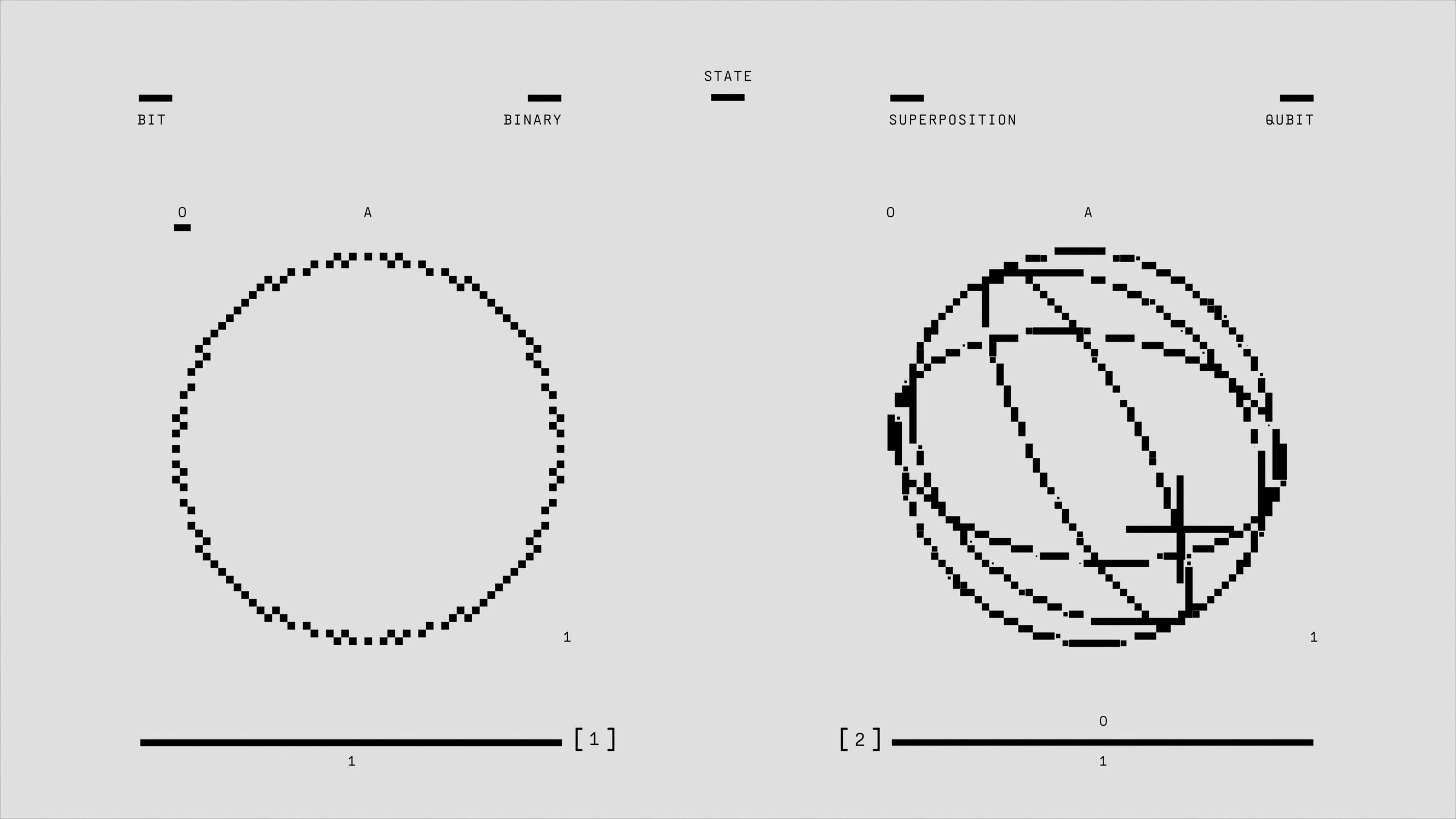
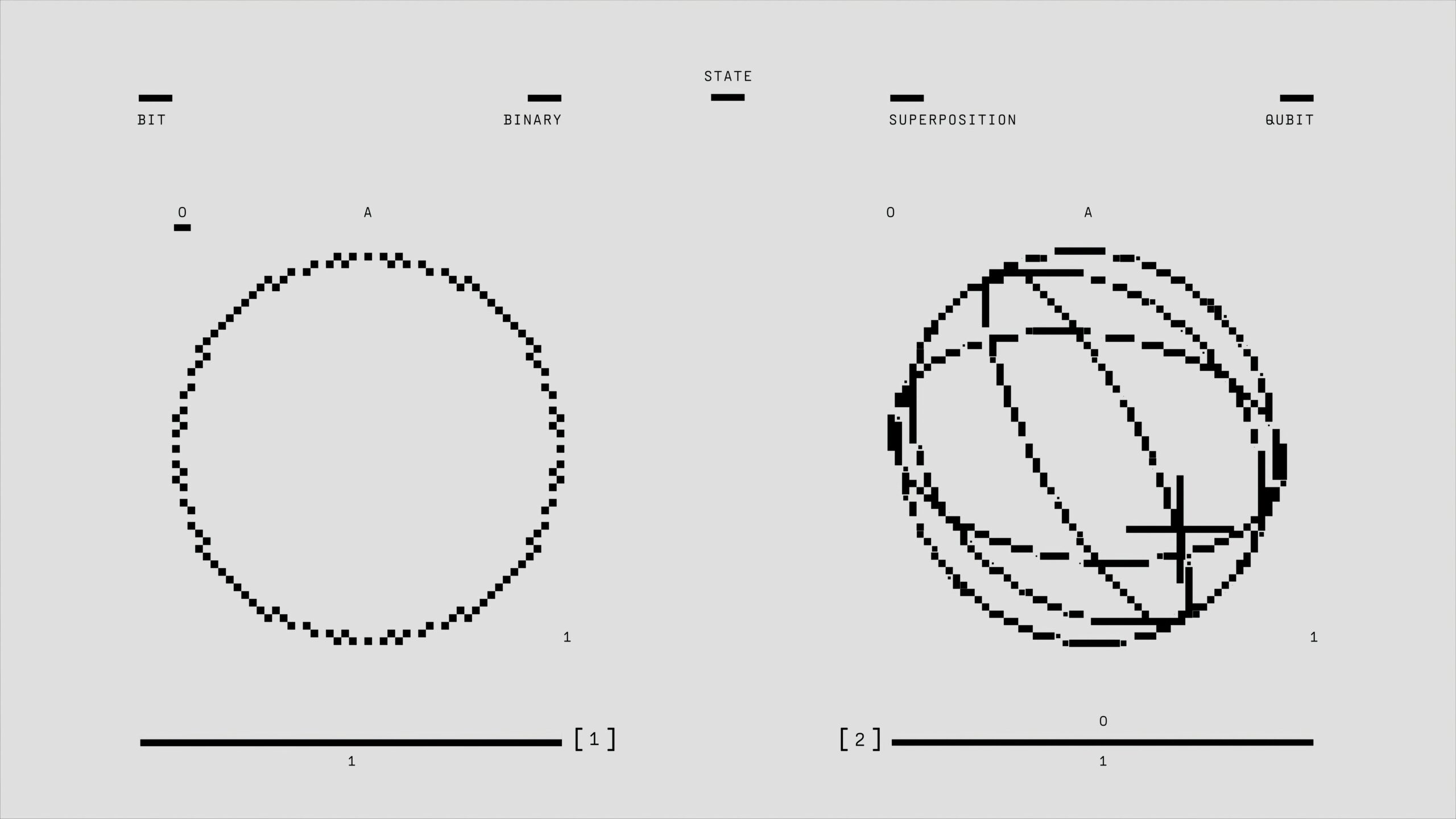
Understanding quantum advantage requires grasping the fundamental differences between classical and quantum information processing. Classical computers store information in bits that exist as either 0 or 1. Quantum computers use quantum bits, or qubits, which can exist in multiple states simultaneously through superposition. This property allows quantum computers to explore vast solution spaces exponentially faster than classical machines.
⚛️ Quantum Mechanics Meets Computation: The Science Behind the Magic
The power of quantum computing stems from three key quantum mechanical principles: superposition, entanglement, and interference. Superposition allows qubits to represent both 0 and 1 simultaneously, creating a probability cloud of possible states. When you measure a qubit, this superposition collapses into a definite classical state, but before measurement, the qubit exists in all possible states at once.
Entanglement creates correlations between qubits that persist regardless of the physical distance separating them. When qubits become entangled, measuring one instantaneously affects the others, creating a unified quantum system that behaves as a whole rather than as independent components. This phenomenon enables quantum computers to process information in ways that have no classical analog.
Quantum interference manipulates the probability amplitudes of quantum states, amplifying correct answers while canceling out incorrect ones. By carefully designing quantum algorithms, researchers can engineer interference patterns that guide computations toward desired outcomes. This orchestration of quantum effects transforms random quantum noise into structured computational power.
The Challenge of Quantum Coherence
Maintaining quantum states presents one of the most significant technical challenges in quantum computing. Qubits are extraordinarily fragile, and any interaction with the environment—even stray electromagnetic radiation or thermal fluctuations—can cause decoherence, destroying the quantum information. Current quantum computers operate at temperatures near absolute zero, isolated from vibrations and electromagnetic interference, in a constant battle against the laws of thermodynamics.
Quantum error correction addresses these challenges by encoding logical qubits across multiple physical qubits, allowing the system to detect and correct errors without destroying the quantum information. However, this redundancy creates its own challenges, as current estimates suggest thousands of physical qubits may be needed to create a single reliable logical qubit. This overhead represents a major hurdle in scaling quantum computers to practical sizes.
💡 Breaking Through Classical Barriers: Where Quantum Advantage Shines
Quantum computers excel at specific problem types that share common characteristics: exponential solution spaces, problems involving quantum systems, optimization challenges, and tasks requiring massive parallelism. Understanding these domains helps clarify where quantum advantage offers genuine benefits rather than theoretical curiosities.
Cryptography and Cybersecurity Transformation
Perhaps the most widely discussed quantum application involves cryptography. Shor’s algorithm, developed in 1994, demonstrates that a sufficiently powerful quantum computer could factor large numbers exponentially faster than classical algorithms. Since modern encryption methods like RSA rely on the computational difficulty of factoring large numbers, quantum computers threaten current cybersecurity infrastructure.
This threat has catalyzed the development of post-quantum cryptography—encryption methods designed to resist quantum attacks. Organizations worldwide are racing to implement quantum-resistant protocols before large-scale quantum computers become available. The National Institute of Standards and Technology recently announced its first standardized post-quantum cryptographic algorithms, marking a critical milestone in this transition.
Conversely, quantum mechanics also enables quantum key distribution, a communication method that’s theoretically unbreakable. By encoding information in quantum states, parties can detect any eavesdropping attempt, as measuring quantum states necessarily disturbs them. Several countries have already deployed quantum communication networks, with China’s Micius satellite demonstrating intercontinental quantum communication.
Molecular Simulation and Drug Discovery
Simulating molecular behavior represents a natural application for quantum computers because molecules themselves are quantum systems. Classical computers struggle to model even relatively simple molecules accurately, as the quantum states involved grow exponentially with system size. Quantum computers could simulate molecular interactions with unprecedented accuracy, revolutionizing drug discovery, materials science, and catalyst design.
Pharmaceutical companies have already begun partnering with quantum computing firms to explore new drug candidates. By accurately modeling how potential medications interact with biological targets at the quantum level, researchers could identify promising compounds years faster than traditional methods allow. This acceleration could dramatically reduce drug development costs and bring life-saving treatments to patients sooner.
Optimization Problems Across Industries
Many real-world challenges involve finding optimal solutions among countless possibilities—scheduling routes for delivery fleets, optimizing financial portfolios, designing supply chains, or allocating resources efficiently. These optimization problems often prove computationally intractable for classical computers as they scale, but quantum algorithms like the Quantum Approximate Optimization Algorithm (QAOA) offer potential solutions.
Airlines could optimize flight schedules considering thousands of variables simultaneously. Financial institutions might construct better-diversified portfolios by exploring correlations classical computers cannot fully analyze. Manufacturing facilities could minimize energy consumption while maximizing production efficiency. These applications promise tangible economic benefits measured in billions of dollars annually.
🚀 Current Quantum Technologies: The Hardware Race
Multiple technological approaches compete to build practical quantum computers, each with distinct advantages and challenges. Understanding these platforms illuminates the diverse pathways toward quantum advantage and the trade-offs involved in each approach.
Superconducting Qubits: The Industry Leader
Superconducting quantum computers, championed by Google, IBM, and Rigetti, currently lead in qubit count and gate fidelity. These systems use superconducting circuits cooled to millikelvin temperatures, where quantum effects dominate. Superconducting qubits offer relatively fast gate operations and benefit from decades of semiconductor manufacturing expertise, enabling incremental improvements through established fabrication techniques.
IBM has made its quantum computers accessible through the cloud, allowing researchers and developers worldwide to experiment with quantum algorithms without building specialized hardware. This democratization of quantum access has accelerated algorithm development and created a growing ecosystem of quantum software tools and applications.
Trapped Ion Systems: Precision and Coherence
Companies like IonQ and Honeywell pursue trapped ion approaches, which use individual atoms suspended by electromagnetic fields as qubits. These systems boast exceptional coherence times and gate fidelities, though they typically operate more slowly than superconducting systems. The precision control possible with trapped ions makes them particularly attractive for applications requiring high-fidelity quantum operations.
Trapped ion systems also offer the advantage of qubit connectivity—any ion can interact with any other ion in principle, unlike superconducting systems where qubits can typically only interact with their nearest neighbors. This connectivity simplifies certain quantum algorithms and potentially reduces the overhead required for quantum error correction.
Emerging Approaches and Future Platforms
Silicon spin qubits promise scalability by leveraging existing semiconductor manufacturing infrastructure. Topological qubits, pursued by Microsoft, could offer inherent error protection through exotic quantum states. Photonic quantum computers use light particles for information processing, potentially operating at room temperature. Neutral atom arrays combine the precision of trapped ions with the scalability of optical systems.
Each approach faces unique challenges in scaling, error correction, and practical implementation. The ultimate winner—or winners, as different platforms may excel at different tasks—remains uncertain, making this an exciting period of technological competition and innovation.
🌐 Quantum Software: Bridging Theory and Practice
Hardware advances alone cannot unlock quantum advantage; sophisticated software ecosystems must translate quantum capabilities into practical applications. Quantum programming differs fundamentally from classical programming, requiring new languages, development frameworks, and algorithmic approaches.
IBM’s Qiskit, Google’s Cirq, Microsoft’s Q#, and Amazon’s Braket represent major quantum development platforms, each offering tools for designing, simulating, and executing quantum algorithms. These frameworks abstract some quantum mechanical complexities while providing flexibility for researchers to explore novel quantum algorithms.
Hybrid quantum-classical algorithms represent a particularly promising approach for near-term quantum computers. These algorithms partition problems into portions suitable for quantum processing and portions better handled classically, leveraging the strengths of both computational paradigms. Variational quantum algorithms exemplify this hybrid approach, using quantum computers for specific subroutines while classical computers handle optimization and error mitigation.
The Quantum Developer Community
A vibrant community of quantum developers, researchers, and enthusiasts has emerged, contributing to open-source quantum software, sharing algorithms, and collaborating on quantum applications. Universities worldwide have introduced quantum computing curricula, training the next generation of quantum engineers and scientists. This growing talent pool will prove essential as quantum computers mature from research curiosities to practical tools.
⚡ Pushing Computational Limits: The Race Toward Practical Quantum Advantage
Achieving quantum advantage on carefully selected problems represents an important milestone, but practical quantum advantage—quantum computers solving real-world problems better than classical alternatives—remains the ultimate goal. This transition from demonstration to deployment requires overcoming substantial technical hurdles while identifying applications where quantum approaches offer decisive advantages.
The NISQ Era: Noisy Intermediate-Scale Quantum Computing
Current quantum computers operate in what researchers call the Noisy Intermediate-Scale Quantum (NISQ) era, characterized by devices with 50-1000 qubits, significant error rates, and limited coherence times. NISQ devices cannot yet implement full error correction, constraining their computational depth and reliability. However, NISQ computers still offer opportunities to explore quantum algorithms, develop quantum software, and identify applications where quantum advantage emerges despite hardware limitations.
Researchers focus on algorithms that tolerate noise, complete quickly before decoherence destroys quantum information, and address problems where even approximate quantum solutions outperform classical approaches. Quantum machine learning, certain optimization problems, and quantum chemistry simulations represent promising NISQ applications under active investigation.
Error Correction: The Path to Fault-Tolerant Quantum Computing
Fault-tolerant quantum computing, where error correction enables arbitrarily long quantum computations, represents the holy grail of quantum technology. Achieving fault tolerance requires physical qubit error rates below critical thresholds (typically around 0.1-1% depending on the error correction scheme) and sufficient qubit counts to implement correction overhead.
Surface codes, topological codes, and other quantum error correction schemes distribute logical quantum information across many physical qubits, enabling error detection and correction without collapsing quantum states. Recent experimental demonstrations have shown that increasing the number of physical qubits per logical qubit actually reduces logical error rates, confirming that quantum error correction works in principle. Scaling this to large quantum systems remains an enormous engineering challenge but appears achievable with continued progress.
🔮 The Quantum Future: Transforming Industries and Society
As quantum computers mature beyond NISQ capabilities toward fault-tolerant systems, their impact will ripple across industries, scientific disciplines, and society broadly. Understanding potential applications helps direct research priorities and investment while preparing organizations for the quantum transition.
Climate Modeling and Environmental Solutions
Climate systems involve countless interacting variables operating across vast scales, creating computational challenges that strain even supercomputers. Quantum computers could enable more accurate climate models, better predicting regional impacts, extreme weather events, and long-term climate trajectories. Improved predictions would inform policy decisions, infrastructure planning, and adaptation strategies as humanity confronts climate change.
Beyond modeling, quantum computing could accelerate the development of carbon capture materials, more efficient solar cells, and improved battery technologies. Designing materials with specific properties requires understanding quantum mechanical behavior, making quantum simulation particularly valuable for clean energy technologies.
Artificial Intelligence and Machine Learning Enhancement
The intersection of quantum computing and artificial intelligence represents a frontier with transformative potential. Quantum machine learning algorithms could process vast datasets more efficiently, identify subtle patterns classical algorithms miss, and train complex models faster. While significant research remains before quantum AI delivers practical advantages, early results suggest quantum approaches could enhance specific machine learning tasks.
Quantum neural networks, quantum support vector machines, and quantum sampling algorithms demonstrate different approaches to quantum-enhanced AI. As quantum hardware improves and quantum machine learning algorithms mature, we may see hybrid quantum-classical AI systems that leverage quantum advantages for specific computational bottlenecks within broader AI pipelines.
Financial Modeling and Risk Analysis
Financial institutions handle extraordinary computational demands analyzing markets, pricing derivatives, assessing risks, and optimizing portfolios. Quantum computers could enable more sophisticated risk models considering previously intractable correlations, faster Monte Carlo simulations for option pricing, and better fraud detection through quantum machine learning.
Major financial institutions including JPMorgan Chase, Goldman Sachs, and Citigroup have established quantum computing research programs, exploring applications and preparing for the quantum transition. The competitive advantages quantum computing offers in finance could be measured in billions of dollars, driving significant investment in quantum technologies.
🎯 Navigating the Quantum Revolution: Strategies for Organizations
Organizations across sectors must consider how quantum computing will affect their operations, competitive position, and long-term strategy. Waiting until quantum computers achieve widespread deployment risks falling behind more proactive competitors, but premature investment in immature technologies wastes resources. Navigating this balance requires strategic planning and quantum literacy across leadership teams.
Building internal quantum expertise through training programs, hiring quantum-literate staff, and partnering with quantum computing companies helps organizations stay informed as the technology matures. Identifying specific problems within your operations that could benefit from quantum approaches allows focused exploration rather than diffuse experimentation.
Cloud-based quantum computing services from IBM, Amazon, Microsoft, and Google enable experimentation without massive capital investments in quantum hardware. Organizations can prototype quantum algorithms, train developers, and assess quantum readiness using these platforms, building capabilities incrementally as quantum technology advances.
Cybersecurity deserves particular attention, as quantum computers threaten current encryption methods. Organizations should inventory their cryptographic systems, prioritize high-value data for post-quantum protection, and develop migration plans toward quantum-resistant cryptography. Regulatory requirements around post-quantum cryptography will likely emerge in coming years, making early preparation advantageous.
🌟 Beyond Computation: Quantum Sensors and Communication
While quantum computers capture headlines, related quantum technologies offer transformative capabilities. Quantum sensors leverage quantum mechanical properties to achieve unprecedented measurement precision, detecting gravitational waves, mapping underground structures, and enabling ultra-precise navigation without GPS. Quantum communication networks promise theoretically unbreakable security for sensitive transmissions.
These quantum technologies may deliver practical applications sooner than large-scale quantum computers, as they don’t require the same qubit counts and error correction overhead. Investment in broader quantum technologies diversifies quantum research portfolios while building quantum expertise and manufacturing capabilities that will benefit quantum computing development.

🔑 Unlocking Tomorrow: The Quantum Advantage Trajectory
Quantum computing represents not a single technology but a collection of approaches, applications, and innovations unified by quantum mechanical principles. The journey from quantum advantage demonstrations to practical quantum systems solving real-world problems better than classical alternatives continues, with significant milestones achieved regularly but substantial challenges remaining.
Progress in quantum computing doesn’t follow predictable timelines—breakthroughs in error correction, novel algorithmic approaches, or unexpected applications could accelerate development dramatically. Conversely, fundamental obstacles might emerge requiring decades to overcome. This uncertainty makes quantum computing simultaneously exciting and challenging to plan around.
What remains clear is that quantum computing will eventually transform computation, scientific discovery, and technological capabilities in profound ways. Organizations, researchers, and governments investing in quantum technologies today position themselves to lead in tomorrow’s quantum-enabled world. The quantum revolution has begun, and its ultimate impact may exceed even optimistic predictions.
The boundless potential of quantum advantage extends beyond faster computers to fundamentally new ways of processing information, understanding nature, and solving problems previously considered impossible. As quantum technologies mature from laboratory demonstrations to deployed systems, they will push computational limits beyond anything classical physics allows, unleashing quantum power across science, industry, and society.